
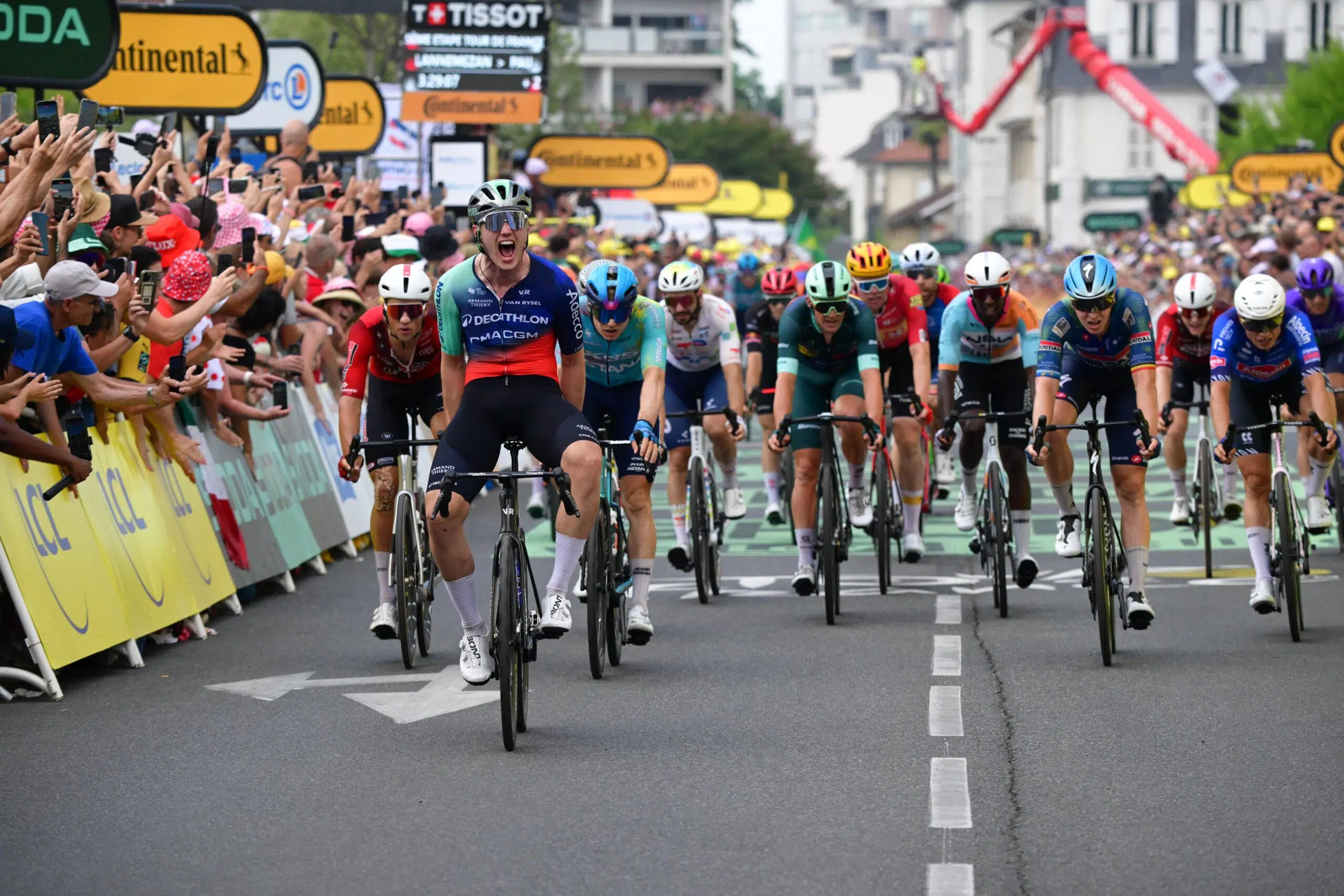
Olav Kooij’s sprint victory on Stage 5 of Tour 2026 Tour France marks a new chapter in the development of the DECATHLON CMA CGM team. It brings to fruition the ambition, nurtured for several months, to become a team capable of competing at the highest level across all disciplines—from the most challenging sprints on the global calendar to the pursuit of top results in the general classification. This ability to perform across all areas of cycling is a cornerstone of the strategy aimed at reaching the world’s Top 3.
2026: The Year of the 70 km/h Turnaround. Historically focused on the general classification, the DECATHLON CMA CGM team is taking a decisive step forward in its evolution with the creation of a sprint unit capable of performing at the highest global level. Through the recruitment of experts, data analysis, and refined tactics, the goal is now to influence the race from the first to the last kilometer, on all terrains—and particularly in the sprints.
I. A History Rooted in a Global Ambition
The team is taking on a whole new dimension. More than just a technical unit, this project embodies a new dynamic. Here are the ambitions announced by the DECATHLON CMA CGM team at the start of the year by Dominique SERIEYS, Chief Executive “We’re heading into this new season with a clear ambition: to establish ourselves permanently among the world’s best teams and demonstrate that the DECATHLON CMA CGM team now has what it takes to compete at the very top on every court.”
And to perform well on all types of terrain, the team had to strengthen its roster with the addition of new riders particularly sprinters capable of competing with the world’s best—with the goal of winning the Monuments and major WorldTour races.


II. Strategic Recruitment
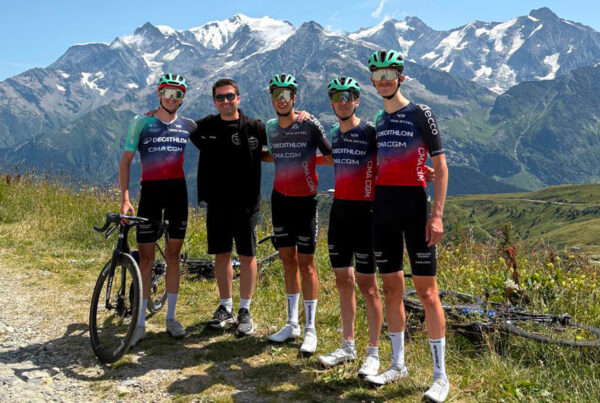
The team is shifting gears to become competitive across the board. It’s a carefully considered and long-term decision. Head Coach Stephen Barrett explains: “The project had been under discussion for two years and took shape in the middle of last year. That’s when we got started and began targeted recruitment of both riders staff.” And for good reason: the team wanted to surround itself with the best on both sides. On riders, there’s Olav Kooij, 24 years old and already with 51 victories—including one recently at the Tour France and three at the Giro—and Tobias Lund Andresen, a year his junior and already a three-time winner this year at the WorldTour level. “Having sprinters of this caliber changes the dynamic. We now have a clear performance goal for every race we enter, ” adds Stephen.

III. Mark Renshaw's Specialized Expertise
On the staff side, the team relies on the expertise of Mark Renshaw, the sports director, who was recruited specifically to oversee the sprints. He explains: “The project was already underway before I joined. The team had already set its sights on recruiting top-tier sprinters to align with its ambitions.” And it didn’t take much convincing to get Mark to join the project: “Working with some of the best sprinters in the peloton, with the goal of winning races at the highest level, is an extremely challenging opportunity as a sports director. It’s very motivating to be able to build something exceptional for the seasons ahead.”
His experience in the Tour France is also a significant asset: he competed 10 times between 2009 and 2019, serving as the lead-out man for Mark Cavendish, who holds the all-time record for stage wins in the Tour de France.
Mark Renshaw explains: “My role is specifically focused on tactics and executing the sprint. Our main goal is to win the biggest races on the calendar and stages at the Tour France.” Having recently retired from racing, he is also a major source of confidence for the riders “I was rider myself rider , and that allows me to understand them better.” An ideal combination on paper.


IV. The Anatomy of the Train: A Precise Hierarchy
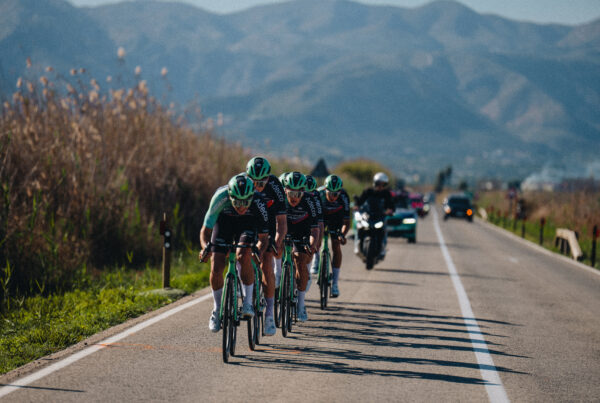
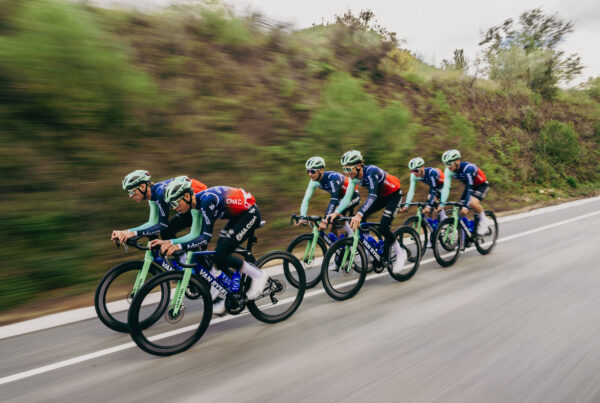
Now that the DECATHLON CMA CGM team boasts some of the riders best riders and a staff recruited to match, the focus is on setting up the paceline and working together. Stephen Barrett explains: “We do various drills during training camps—whether at the start of the season or later on—to optimize the position of each rider the paceline.”

V. The Science Behind the Final Lead-out rider
The lead-out rider is regularly found among the top finishers in the sprint. And for good reason: he’s the last one to accompany the sprinter. Without a lead-out rider, the sprinter has to search for the right wheels, wasting mental and physical energy. But with a lead-out rider staying with him until the very last meters, it’s a whole different story. The rider positions rider in his teammate’s slipstream and only has to focus on his sprint. “The role of the last rider to launch his sprinter between 250 and 150 meters out to maintain or increase speed,”explains Stephen.
Cees Bol was chosen to serve as the lead-out rider for Olav Kooij, the recent winner of Stage 5 of Tour 2026 Tour France. Riding just ahead of him is Daan Hoole, who is capable of positioning himself well and pushing hard in the final hectometers of the race. As for Tobias Lund Andresen, Tord Gudmestad played a key role in his recent victories early in the 2026 season.

VI. The Three Pillars of Tactical Success
In a race considered a sprinter’s race, it’s sometimes hard to pick a winner. On paper, 3, 5, or even 10 riders win. A sprint victory also reveals great tactical ability. Mark Renshaw explains: “It’s not always the rider who wins. It’s the rider —and the one with the best team to get him across the finish line. Tactics, positioning, and teamwork: these are the three pillars that make all the difference.” This is where race preparation and the pre-race briefing become crucial: using visualization to identify the key sections of the race in the final kilometers and knowing exactly where the ideal position would be.
VII. From Data to Sprint: High-Speed Preparation
You can’t wait until the first sprint of the season to prepare for what the riders will face riders nerves, communication flying in all directions, riders —and all of this at very high speeds. So, it’s important to train for this and simulate sprints together. Stephen Barrett explains: “We do high-speed work behind a motorcycle, at speeds of 60 to 70 km/h, to prepare the sprinters for those speeds.”
Then there’s theory and practice: what we’ve been planning on paper for months and weeks finally comes to life during our first training sessions together. This riders the riders learn how to communicate with one another and to read riders body language—to tell whether they’re feeling good or not—so that everything flows smoothly on race day.


VIII. The Physical Challenge: Surviving in the Mountains
There’s a lot of talk about stage races—and especially about sprints in the Grand Tours—but to be able to sprint, you also have to be able to tackle the mountain stages as well as possible. This specific mountain training tends to take place in the second half of the season, as the Grand Tours approach. Stephen Barrett explains: “A high-altitude training camp held before each Grand Tour that’s when we incorporate mountain training for the sprinters.” The goal is simple: to enable them to complete the mountain stages within the time limits while preserving the physical qualities necessary for sprinting.
IX. Communication During the Race
During the race, the riders earpieces to communicate with the sports director in the car and receive instructions. Mark Renshaw explains the strategic importance of this tool: “The beauty of the radio is that it allows us to adjust tactics during the stage based on how the race is unfolding.”The riders also riders with each other using very short phrases that let them know where they stand, their position, and whether they should move forward or wait. However, Stephen Barrett notes: “From a certain point until the finish (which depends on the race), there’s no more radio communication.”There’s already enough tension in a sprint without adding to it through the earpieces.
However, communication can be very difficult under certain circumstances. Mark Renshaw explains: “In the Tour France, it’s very hard to communicate over the noise of the crowd, even well before the sprint.”

X. Long-Term Vision: Learning Together
The ambitions and dreams are big, and we’ve already seen that the approach works, thanks to the victories of Tobias Lund Andresen and Olav Kooij. The riders continue, step by step, to find their footing and get to know each other better and better so they can aim even higher. “Our goal is to be one of the best teams in the world in this field,” says Stephen Barrett.
A train, sprinters, a coaching staff, and a training methodology tailored to the ambitions of the DECATHLON CMA CGM team. And this is just the first year of a wonderful story that’s about to unfold at high speed. Stay tuned!