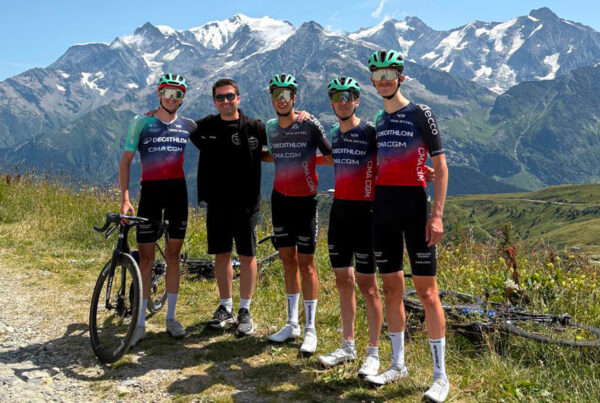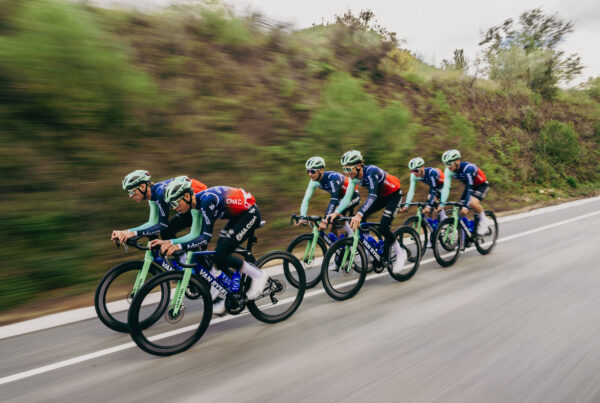

11 riders. That’s the number of up-and-coming talents on the WorldTour roster in 2026. Today, nearly a third of the team has come up through the NewGen program. In a cycling world that no longer waits—where talent is emerging earlier and earlier—our program has established itself as a true launching pad. The DECATHLON CMA CGM team offers a comprehensive training program, from juniors to the development team, to best support its future champions. Guillaume Bonnafond, Head of NewGen, breaks down the pillars of this philosophy, illustrated by the journey of American rider Braden Reitz.
I. A promising team starting with the junior ranks
Cycling has changed: talent is emerging earlier and earlier. “The organization was visionary from the start in creating this program; it allowed us to attract many promising riders because we were among the pioneers in these age groups, ” says Guillaume. Today, riders scouted as early as the cadet years, with the goal of joining a WorldTour team’s development squad as soon as possible. “The junior category has become a competitive market; everyone is afraid of missing out on tomorrow’s rising star.”
So, the team launched the NewGen program in 2024. The goal is simple: to identify and mentor future champions so that they join the WorldTour team already prepared to compete at the highest level. “For me, this is the best development team in the world, and that’s why I did everything I could to join it,” says Braden Reitz, rider in his first year with the development team, after spending two years on the junior team. NewGen thus provides a unique framework for personal and technical development.
The junior squad riders fifteen riders , and another 13 talented athletes are part of the development team. With the arrival of Guillaume Bonnafond in 2024—himself rider former rider the team from 2009 to 2016 and a product of the club’s youth program—the team has become more structured: “My arrival has allowed us to assign specific responsibilities for training and sports management.” The challenge: supporting these early ambitions without losing riders the way: “We encourage a multidisciplinary approach, a key step in the athlete’s overall development before moving up to the next level.”


II. 100% of riders are enrolled in school
Faced with the pressure to deliver results, the team made a bold choice: patience. “For the juniors, we decided to protect them and let them stay in their family environment, so they could develop in a healthy setting that balances education and high-level sports.” And for good reason: the second junior season is a pivotal year for young athletes—high school graduation exams, navigating teenage life, and proving their athletic worth. And that can quickly become a lot for a 17- or 18-year-old to handle. “The sensitive issue is that, as juniors, riders now riders a significant part of their careers while they haven’t even finished high school yet. That’s very young. In other teams, some riders drop out of school. But here, that’s not the goal.” Today, 100% of riders are enrolled in school, and the team supports them in balancing both commitments: regular communication to adjust the race or training schedule around major school deadlines. The team also prepares them for their international future by providing language classes, and that’s also what convinced Braden, an American, to join the team: “I completed my high school years remotely for a year and a half while racing in Europe. It was very easy to manage because the team is supportive: last year, when I needed to return to the United States to see my family, they adjusted my race schedule immediately.”
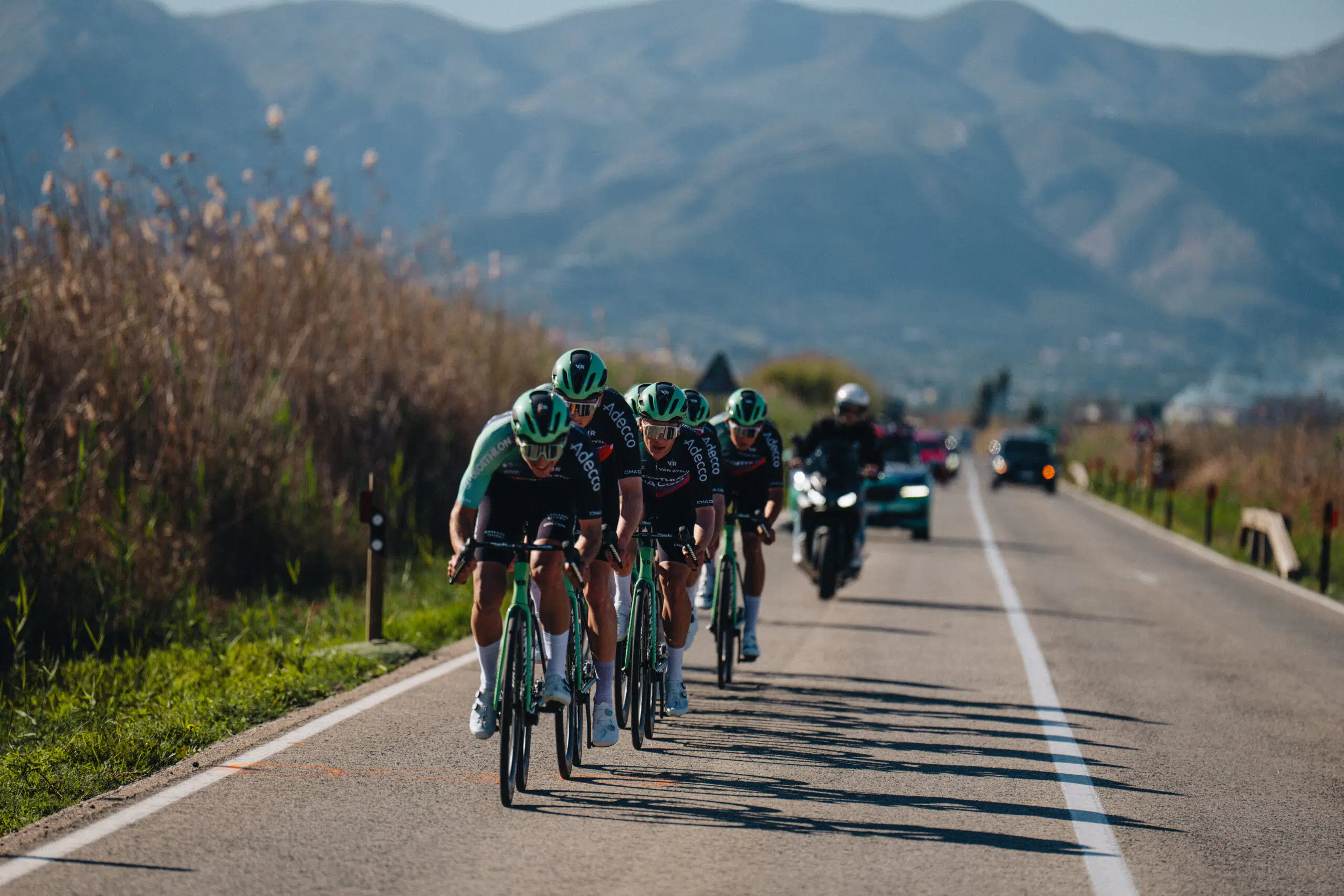
III. Integrity as a Top Priority
One of NewGen’s goals is to train riders and responsible. They learn to act maturely, manage their nutrition and bike maintenance, all while taking ownership of their own development. “From the staff’s perspective, this training aspect really appeals to us because the young riders arrive a bit rough around the edges, and we see them gain maturity over the years to become true professionals,”, says Guillaume Bonnafond.
This growth is personal, but also professional—covering training, nutrition, and mechanics. Guillaume explains: “ The staff also teaches the young riders good manners and how to conduct themselves in the sport. There’s a real transmission of values that they carry with them afterward. In the WorldTour, the bike has to run almost on its own, and the riders ask questions. Here, we teach them to be curious, to maintain their equipment, and to adjust their derailleurs.”


For Braden, who lives in the area and frequently visits the race department, this proximity to the team’s experts is a major advantage: “Having the coaches, mechanics, doctors, and the gym all in one place is a huge advantage. If I have even the slightest problem or a question about my equipment, everything is right there. We’re given exactly the same tools as the riders to help us improve every day and tackle each stage one by one.”
IV. Continuity: A Bridge to the Elite
For Guillaume Bonnafond, the key is consistency: “I want to create continuity so that rider the same philosophy and the same language from age 17 to 22.” This transition between the Junior, Continental, and WorldTour levels is facilitated by joint training camps and a schedule planned with the sports directors to ensure a thoughtful progression, without ever just “filling in the gaps.”
Braden, who has moved up from the Juniors to the Continental ranks, confirms this smooth transition: “The atmosphere and support are the same, which makes the transition feel very natural. I’m racing today with friends I met in the Juniors, and I’m already competing in some WorldTour races to learn from experienced leaders.” And this success also relies on a passionate staff: “Those who work at NewGen are there by choice, not by default, because they care about people and education.”

V. Process Control: Success Metrics
In 2026, more than half of the development team—7 riders 13 riders —came up through the junior ranks. This proves that the support provided, both personal and athletic, is paying off. “We’ve accumulated so much data that we’re now able to very accurately assess potential and its development,”, explains Guillaume. Yet the philosophy remains human-centered: the team is more attuned to a person’s overall development than to a single line on a list of achievements.
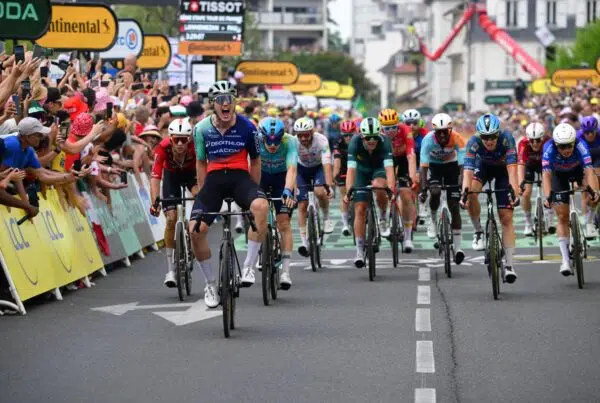
But talent always shines through in the end. Take Antoine L’Hote, for example, who won the Région Pays de la Loire Tour in his very first year on the WorldTour Tour completing the entire development program. Another striking statistic: of the six riders to the WorldTour team over the past two seasons, four have already won as pros. This impressive record is further bolstered by last year’s victory by Aubin Sparfel, currently on the development team but set to join the WorldTour in 2027. The culmination of this strategy came at Liège-Bastogne-Liège 2026, where six riders the program lined up at the start, proving that patience and method lead to the highest peaks.

By overseeing the entire training process, the DECATHLON CMA CGM team does more than just recruit riders it builds a culture. The NewGen program is no longer just a promise; it is the driving force behind the team’s sustained performance. Braden sums up this sentiment perfectly: “It’s undoubtedly the best development process in the world. We’re given all the necessary tools and incredible support to reach our highest potential, without any unnecessary pressure.”
By giving young players time to grow into men before they become champions, the team ensures that today’s victories are just the beginning of a long line of successes. The next generation is ready, and they’re already speaking the same language as their elders.