
How did the team structure its preparations for the Vuelta ?
“We decided to bring the entire ‘ Vuelta ’ group together for about twenty days of collective training, including the reserve members. This is a new development this year: the ‘ riders ’ did not return home between the national championships and the July training camp, unlike in previous years when some would take a break before heading to training camp and then moving on to races in Spain or at the “ Tour ” in Poland.”
You've also been innovative in the composition of the " high-altitude training camp." Why?
Another new development was heading out to high altitude with a group of ten riders , all with very different profiles. Usually, these training camps are structured more around groups of climbers, climbers-sprinters, or road specialists. This time, we added sprinters to the mix. We had to tailor the training more closely to each individual to meet everyone’s needs. It was a real challenge, but everyone found their balance.
What made the biggest impression on you during this internship? Is there a particular moment that stands out to you?
I was particularly impressed by the dedication and commitment of the “ riders .” In terms of team cohesion, this format allowed us to train together as a group, which was very positive. The setting was exceptional, with beautiful roads and ideal weather. It was a fairly long training camp, and with this type of preparation, tensions can sometimes arise. But that wasn’t the case. Managing recovery and nutrition was essential, and the group’s commitment to these aspects was truly impressive.
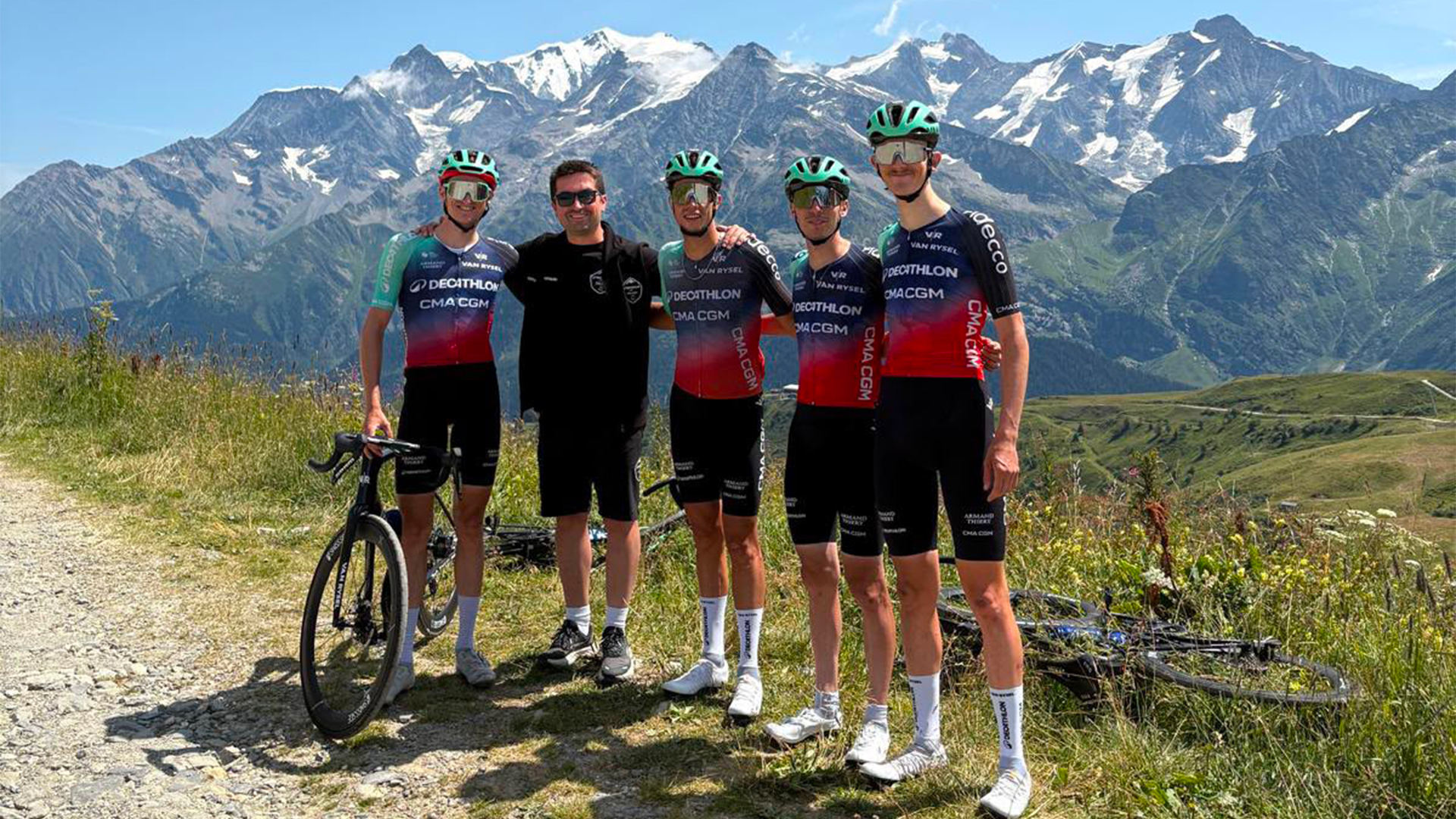
"A moment that really symbolizes this training camp is the group photo we took at the summit of the Col du Joly, in the Beaufortain. That ride had the greatest elevation gain and was designed for climbers, and the reward at the finish—the view of Mont Blanc—was magnificent. That shared moment will remain a wonderful memory."