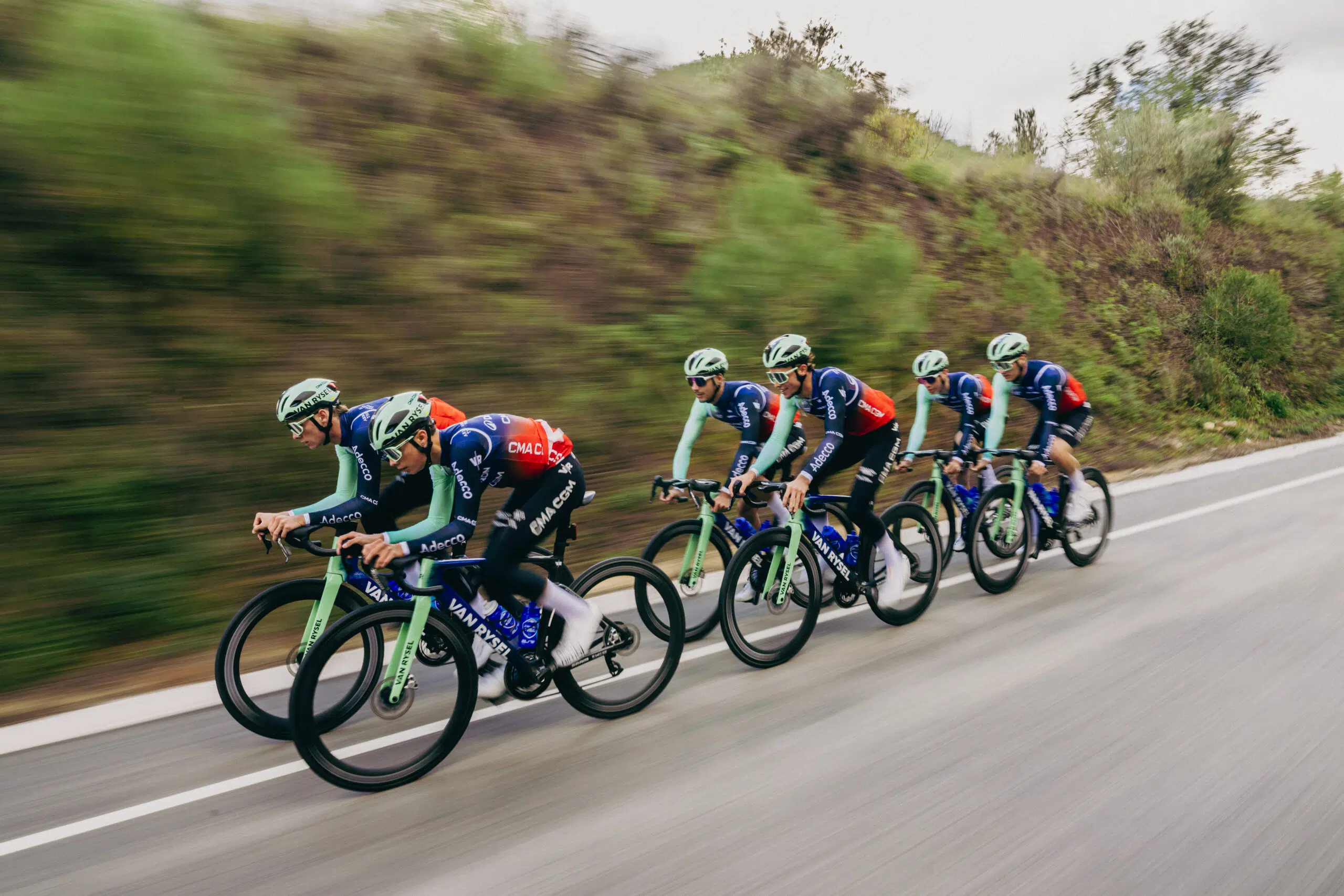

247 WorldTour race days – 28 riders behind these numbers lies a true strategic challenge. How do you plan and structure the season for each rider while staying focused on the team’s goals? Today, victory no longer depends solely on raw talent, but on a meticulously tailored and individualized performance framework. And when we talk about training, we’re not just talking about a coach, but rather a synergy of roles that revolve around the rider. Jean-Baptiste Quiclet, Head of Performance, tells us, “Performance has a cross-functional goal: to provide the right environment, the right tools, and the right support for riders perform.” How does this work?
I. Individual Training Management
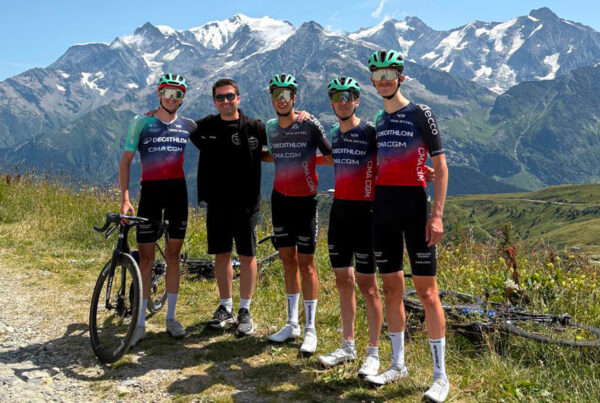
The team’s success is built around riders and a skilled staff dedicated to riders. That’s why the riders 28 riders are trained in-house by a diverse group of coaches. Stephen Barrett, the head coach, trains four riders are part of the sprint group. Five other coaches are responsible for training the remaining riders, each overseeing between 6 and 8 athletes. A group of riders is paired with international coaches who are thoroughly familiar with the specific training needs of each rider’s profile.
Stephen Barrett, head coach, explains: “Starting in October, we hold one-on-one meetings with the riders determine who the best coach would be. Sometimes the choice is obvious because each coach has their own specialties; other times we wait to see which rider coach are the best match.” In fact, if you asked the athletes who tops their call log, their coach’s name would undoubtedly come in first. A strong personal relationship is essential for building confidence and performing well.


All of the team’s coaches are guided by a shared philosophy based on three key principles:
- collaboration
- simplicity
- adaptability
The idea is that each coach combines these elements to tailor the approach to their own style and their riders. Jean-Baptiste Quiclet explains: “Data then serves as the compass for performance: everything is analyzed on TrainingPeaks using power meters.” This allows for factual tracking and constant adjustment of training blocks, which are often spread out over 2 to 3 weeks. He adds: “and this lets us assess our riders fitness levels, determine whether the strategy can stay as originally planned, or if we need to adapt.” So how do we plan these training sessions while taking into account the characteristics of the races and the riders
II. The "cell" structure: expertise by objective
Before riders training schedule riders finalized, the team must work with the riders to set individual goals that will help them perform at their best. The team is organized into five groups to plan the season: one group for the Grand Tours, the Flemish classics, and the “punchy” classics (including the Ardennes classics). This allows the team to focus on the season’s top priorities and establish an appropriate training program.
The season’s schedule also includes strategic altitude training camps. Jean-Baptiste Quiclet explains: “We operate in large blocks. Each Grand Tour its own altitude training camp, and each race category has its own preparation camp.” Heading to Mount Etna for the GIro, the Sierra Nevada for the Tour France, and Arc 1950 for the Vuelta. These training camps allow for physical training, but also psychological preparation to experience a Grand Tour the riders staff. Stephen Barrett emphasizes: “The benefits of a training camp are both physical and psychological. We go through tough times on the bike, but also have good times off it. We build team cohesion. And it’s thanks to that that we’ll then fight together for three weeks to achieve the best possible result.”

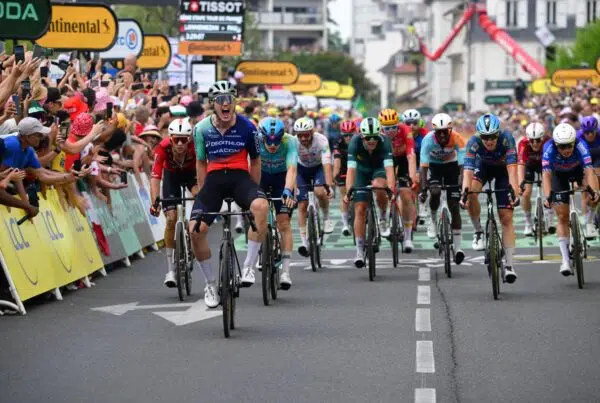
Beyond physical conditioning, these training camps aim to refine nonverbal communication. Through repeated practice, the riders their teammates’ body language so they can react instinctively in the final stretch of a race. Stephen Barrett explains: “Training camps, especially those focused on sprinting, allow us to learn and practice nonverbal communication: repeating race-like efforts helps us learn our teammates’ body language and react better during the race.” So yes, we could wait until the first races for that, but it’s better to do it beforehand so we can win right from the start of the season, isn’t that right, Tobias Lund Andresen?
Of course, there’s the ideal training plan, and then there’s the reality of the sport: falls, injuries, illnesses, slumps… many factors can disrupt this performance-oriented training model. So the team holds weekly meetings, attended by the sports directors, so that everyone can share the latest updates on each rider thus adapt future race and training schedules. Adaptability—that was indeed the third pillar of our coaches’ philosophy!


III. Managing the Training of Young Talents
Six years ago, the youngest member of the team was 22. Today, five of them are under 21. The professional peloton is undergoing an unprecedented rejuvenation, a trend reflected in the roster of the DECATHLON CMA CGM team. Young talents are performing at a high level earlier in their careers, but that doesn’t mean we should rush things. Jean-Baptiste Quiclet explains: “It’s a deliberate choice by the team to identify what’s important for our young riders’ development without compromising their future. Sometimes, we have to slow down their progression to protect them for what lies ahead.”
The key principle, then, is gradual progression above all else: the goal is to increase both the volume and the number of riding days (45 to 60 days for a young rider, 80 days for a rider experienced rider ) without rushing things. Stephen Barrett adds: “Going from 500 to 1,000 hours of cycling per year can cause damage. We need to be mindful not to do too much, too soon, because that has negative consequences after two years.” Young riders therefore train differently, participate in fewer races, and prioritize training camps and gaining experience and muscle memory. Quality over quantity.

Performance at the DECATHLON CMA CGM Team is a constant balance between planned training, data, and the riders sensations. The coach-athlete relationship is essential for making progress with confidence. Ultimately, according to Jean-Baptiste Quiclet “it’s the synergy between the different fronts that’s the most complex to manage.” Yes, when training is done right—with collaboration, simplicity, and adaptability—we then have to navigate the race calendar and its uncertainties so that every rider the course ready to perform at their absolute best. And it seems to have been working very well since the start of the season.