
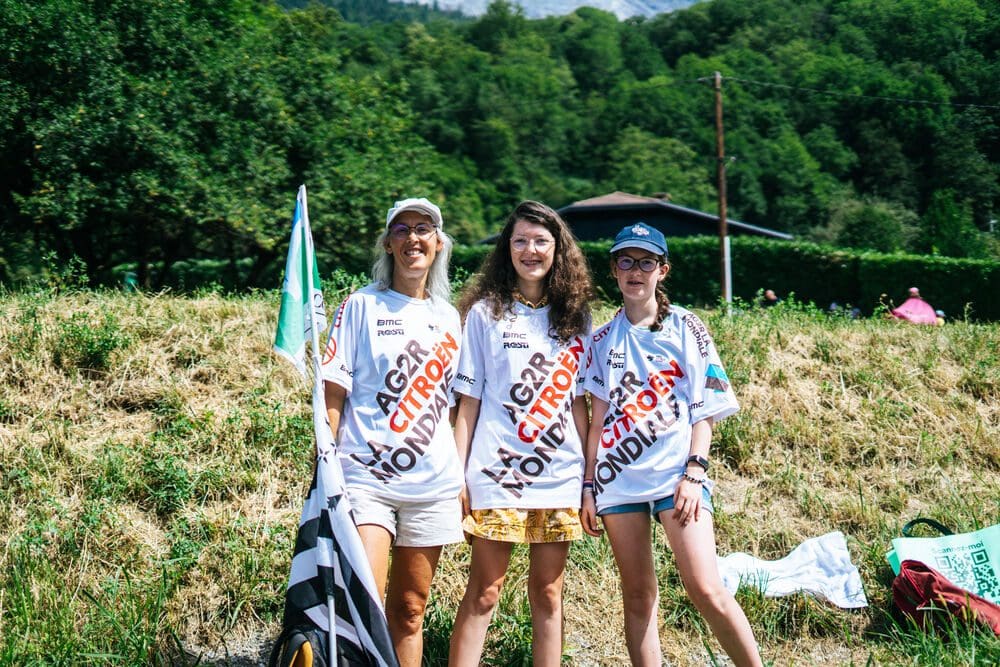
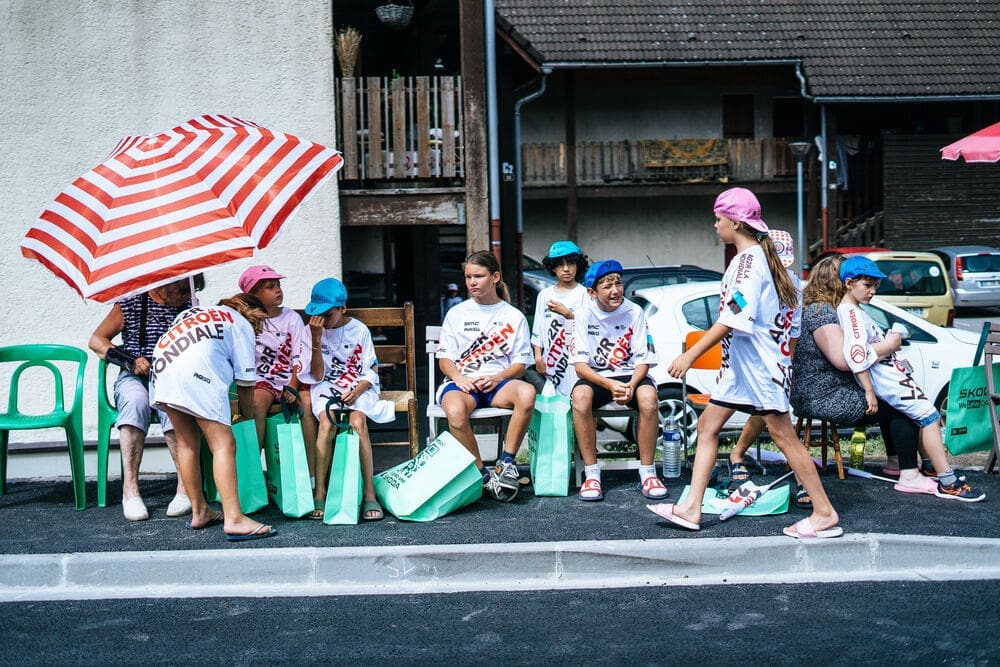
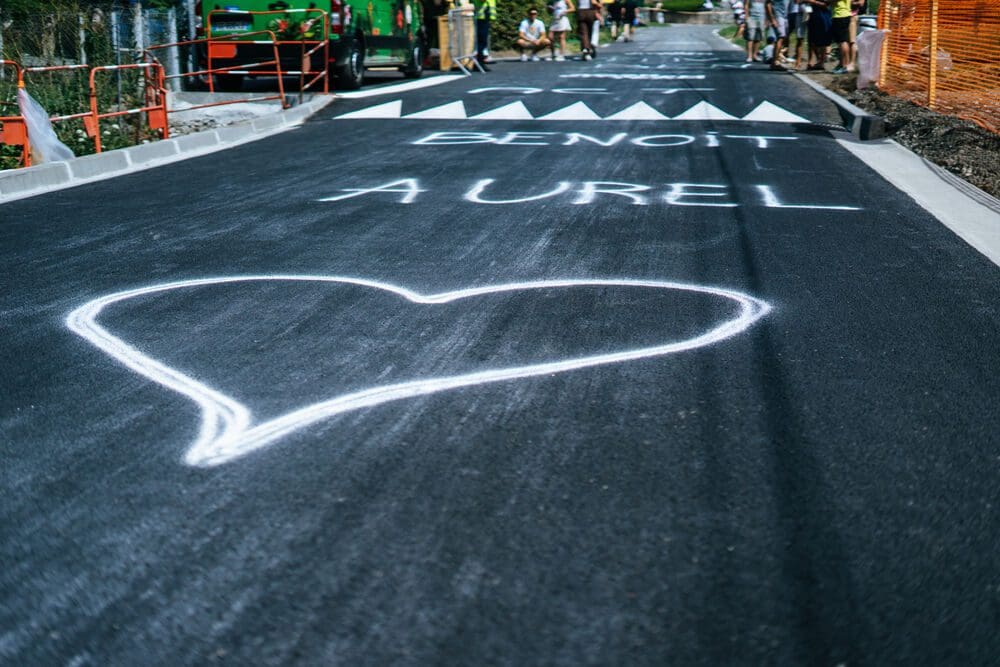
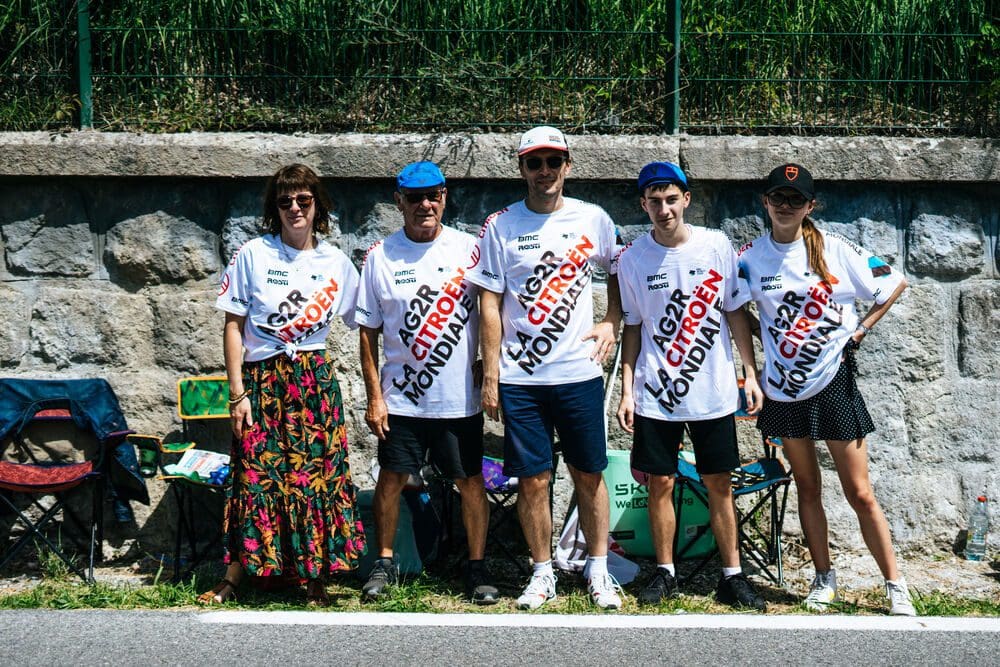
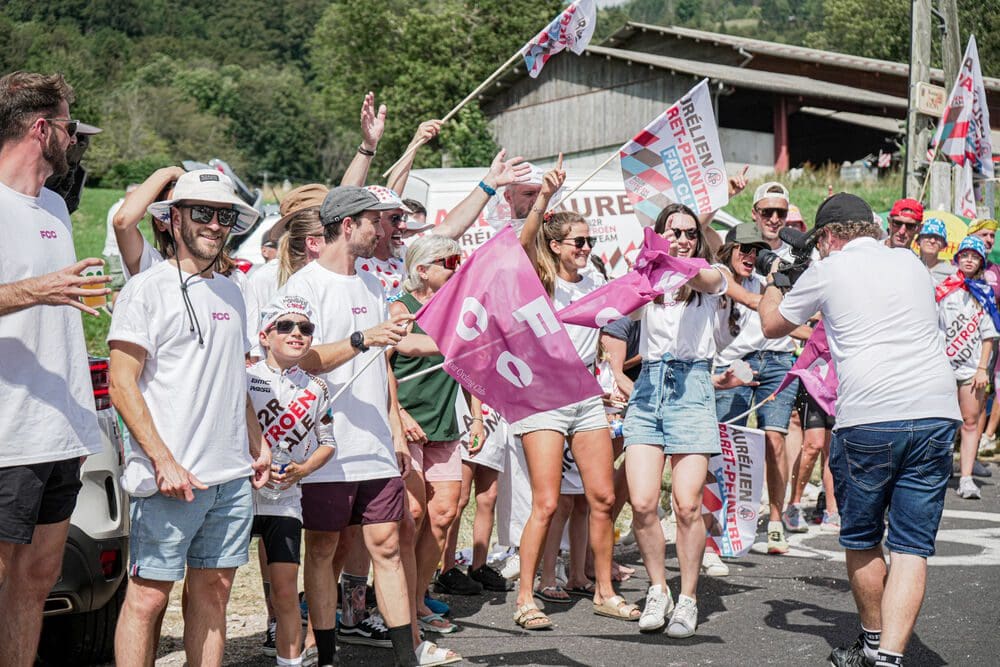
Going to see a stage of the Tour de France can be quite an adventure. We met with the team's fans on the roads to ask them to share their tips for a successful day.
1 - Planning your day
Visit the official Tour France website, which provides you with three key pieces of information:
- the stage profile to determine the portion of the stage you want to enjoy
- the map to see how to get there
- the hourly itinerary to calculate your day according to the passage of the Caravan and the race
Tip: On race day, you can follow the progress of the race (and the Caravan!) live on the Tour France Race Center. 👌
2 - Choose your ambience
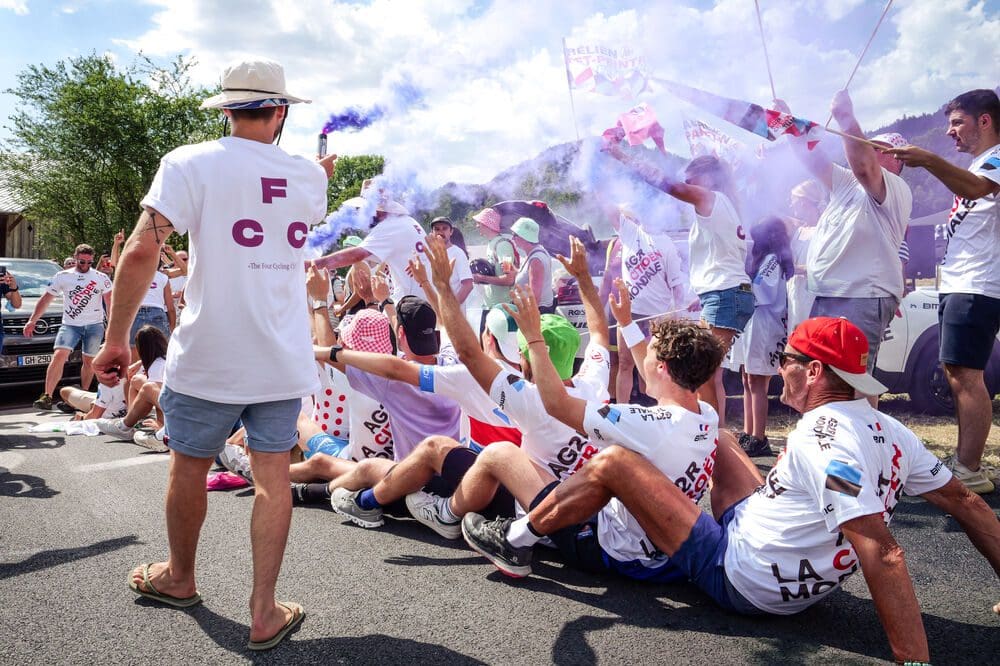
A bike ride and a picnic with friends, a great day out with the family or the gentle madness of the Four Cycling Club... the choice is yours!
3 - Getting ready
Be prepared for the weather: take along clothing suited to the weather conditions, which can be extreme and changeable, especially in the mountains. Also bring something to protect yourself from the sun: sun cream, hats, parasol... you'll be spending nearly 7 or 8 hours on the roadside. 🥵
Take enough food and drink to last the day, as options may be limited along the route.
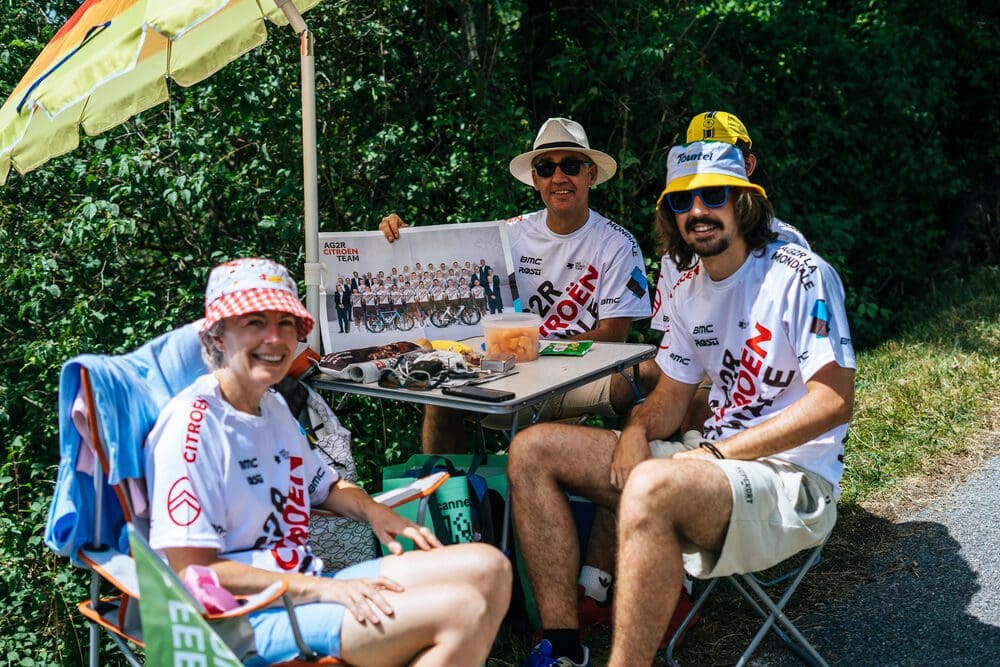
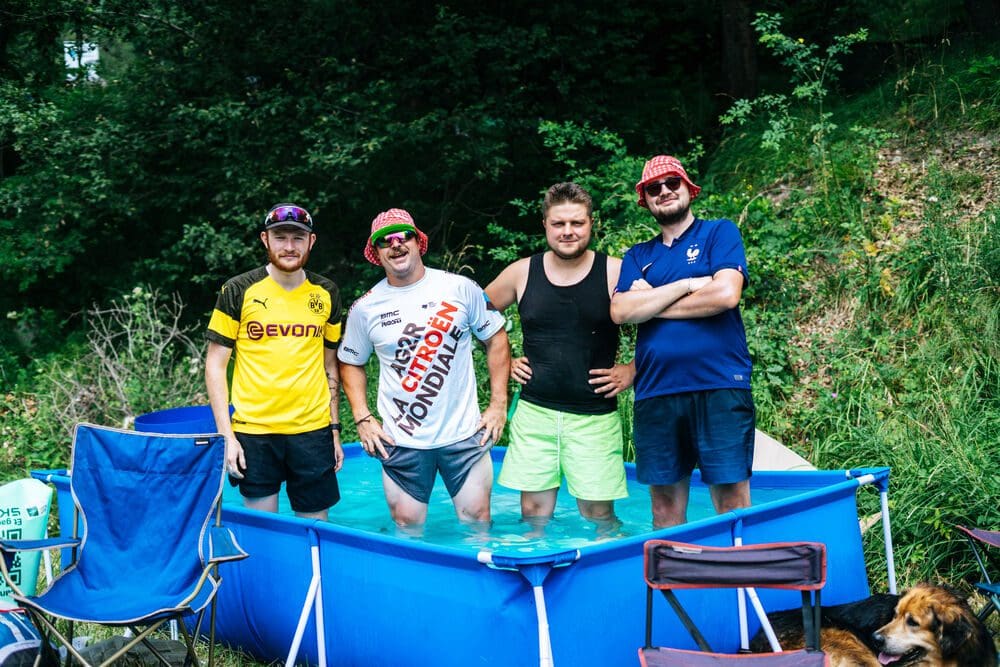
Some are more forward-thinking than others, like Thomas and Mathieu: "We definitely came with the pool. We had a good opportunity yesterday, and we said to ourselves, 'Let's go,' and bought it. Maybe the guy who sold it to us will recognize us on TV. 😅 All that's missing now is the barbecue, which will arrive in an hour."
4 - Choose a good location
There is no such thing as a "good location" per se, only the one that suits you!
On a climb to watch them go by longer, on a plain for easy access, close to the finish to enjoy the crowds and the atmosphere, at the beginning of the stage to spend a quiet day, a place with network covergage for those who want to follow the stage on their smartphone... it's up to you to define your criteria and find the ideal location on the day's route.
For Mathieu and Thomas, it's the local choice: "It was easy for us, we live right next door, so we didn't really think twice about it. It's still a lucky break to have it on our doorstep." For Jarod and Paul, it's a case of being spoiled for choice: "We follow the Tour several days, so we try to find nice places and vary our locations: finish lines, start lines, midway points, etc."
5 - Respect the race
“When you come, the first thing you have to do is adopt the codes of Tour France, which means following the rules so that everything goes smoothly for everyone,” says Mathieu.
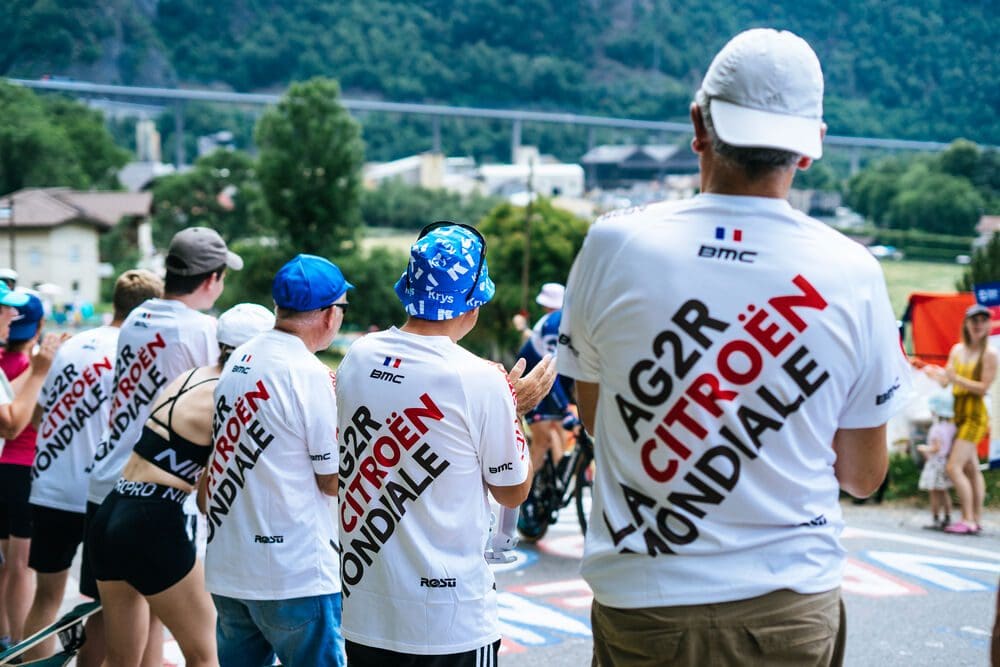
Stay behind the safety barriers, do not encroach on the roadway, and follow the organizers' instructions. The safety of spectators and riders is paramount. It's also a matter of sporting fairness: all too often, riders are hampered by vehicles blocked by crowds.
6 - A return plan
After the end of the stage, the roads can be very congested, especially on the descents of the mountain passes. At summit finishes, the road sometimes remains closed long after the race to allow the evacuation of organization vehicles, the Caravan and teams.
And if you've chosen the "atmosphere and intensive hydration" option, perhaps it's better to stay overnight... 🙃
7 - And why not enjoy the opportunity to travel?
This is the case for Jarod and Paul: "We're following the Tour France for a week. We do this in a tent every night. We meet lots of people. We meet people who live locally because we always ask before pitching our tent. We also meet people from other places: yesterday, for example, we picked up some Colombian fans who were hitchhiking and ended up spending the day with them."
The last word
Now that you know everything, we hope to see you out on the roads soon, wearing your team jersey and flag of course!
A final word from Thomas & Mathieu: "Cycling is a free show, it doesn't cost a penny, which is incredible. Today, there aren't many sports like that. That's why we give it our all and put on a show. That's also the magic of Tour France: people who are proud of their region, who show it and who are actually part of the event."