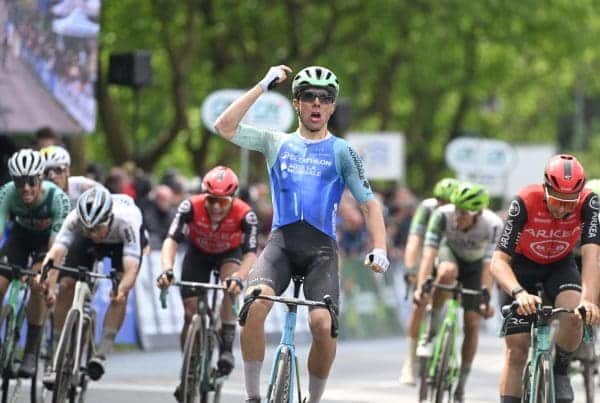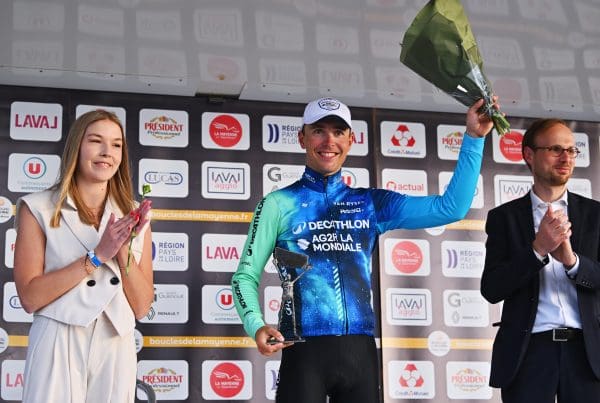

Whether it's winning a race, competing for the overall classification in a stage race, or supporting their leaders for as long as possible, professional cyclists pace their careers according to the goals they set for themselves. It is in this quest that riders find the motivation and physical strength to push themselves beyond their limits every day. Go behind the scenes to see how Benoît Cosnefroy prepares to be ready for the big day.
What is a sporting objective?
The sporting objective is a goal that athletes strive to achieve several times during their career or even during a single season. It varies depending on the profile, role and abilities of the runner. After convincing results in one-day races, (victory in the Bretagne Classic, Quebec City Grand Prix Victory, 2issue of the Flèche Wallonne, 2issue of the Amstel, 2issue of the Brabant Arrow) Benoît Cosnefroy trains and prepares with the aim of winning a major classic, such as the Tour of Flanders or the Ardennes classics.
What are the steps involved in preparation?
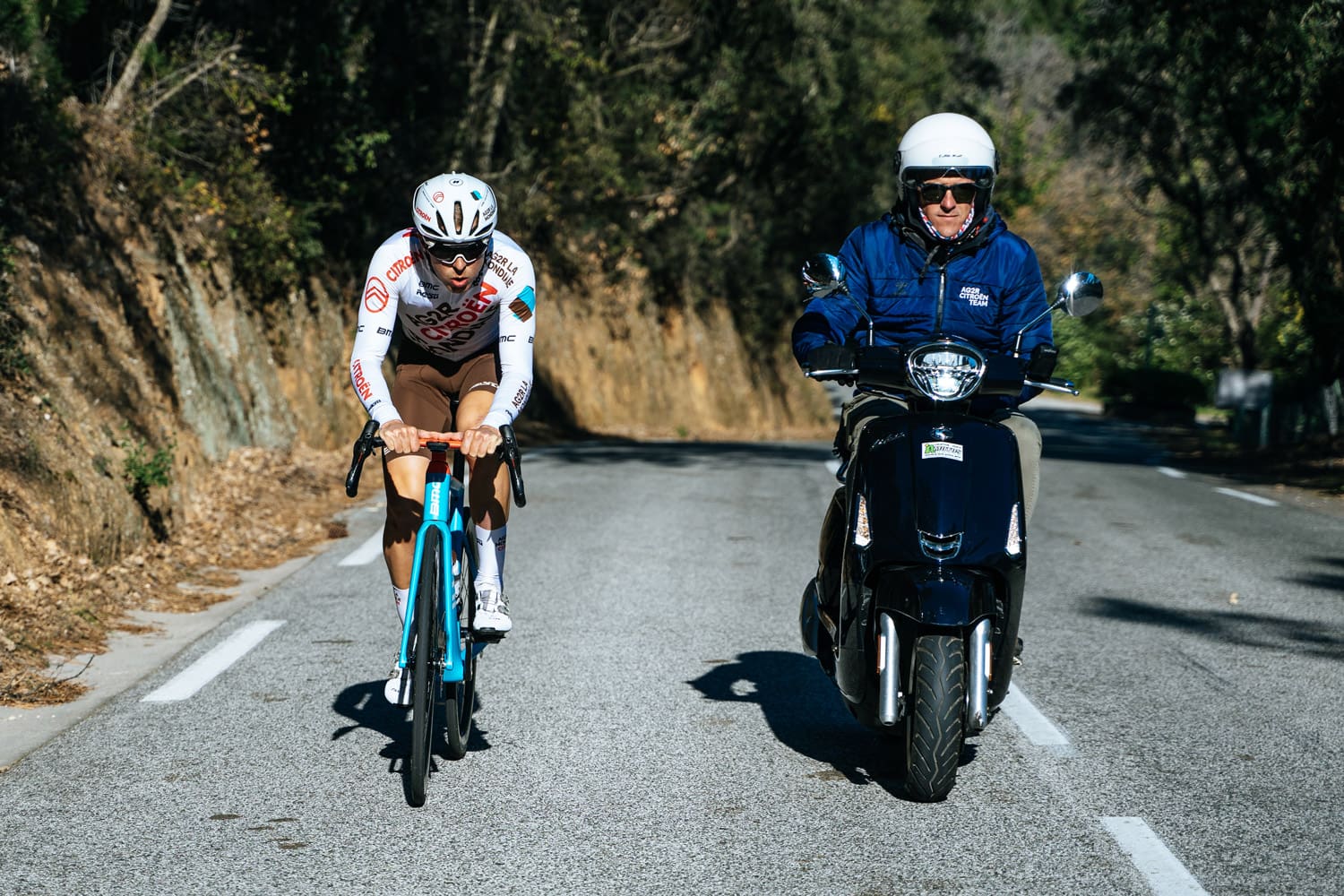
When setting a sporting goal with an athlete, you must go through a number of steps to ensure that the goal is appropriate and achievable in the future. That is the job of Nicolas Guillé, Benoît's coach and sporting director for the AG2R CITROËN team.
Validate the running programme and set targets:
During the goal-setting phase, coaches and sports directors sit down with the rider to precisely define their sporting objectives. It is important to understand what the athlete wants to achieve in order to establish the best plan of attack.
Prepare the training programme:
The training programmes begin with two initial blocks: early season training camps Then the runners will have a monthly programme based on their goals.
Individualise and support the runner:
Each rider is monitored and supported by a coach throughout the season. This duo maintains a close relationship to fine-tune their preparation through specific training camps. These may be in small groups, for example climbers will go to high-altitude training camps, or individual training camps. Before tackling the Classics, Benoît Cosnefroy spent five days in the Var region with his coach, Nicolas Guillé.


The support process
Runners show the greatest improvement in the first three or four years. After that, their progress stabilises, they become more resilient and can handle heavier workloads. The coach then focuses on other specific areas in order to continue to improve the runner's performance and collaborates with other experts within the team (nutritionist, equipment expert, mental coach, data analyst).
Individualised monitoring is therefore very important in order to get to know an athlete and identify areas for improvement over the years. It is necessary to be able to break habits.
Thanks to AG2R CITROËN's U19 and U23 teams, from which Benoît Cosnefroy hails, the performance unit gains valuable years of experience through historical data and by forging relationships at the very beginning of a rider's career.
Communication between coach and runner
The quality of the coach-rider relationship has a direct impact on preparation. The life of a professional cyclist is punctuated by constant travel between races and training camps. Most of the time, communication takes place remotely.
Benoît and Nicolas have therefore established rituals to maximise communication. Debriefing after races, discussions after sessions, a weekly meeting every Monday morning.
The duo sometimes find themselves racing together. Nicolas, in his earpiece as sports director, Benoît on his bike. An undeniable advantage when it comes to competing for the win.


The mindset of preparation
The goal of any athlete participating in a sport is to be as mentally prepared as possible. This means that they must have the right mindset to be able to achieve their sporting goals.
For Nicolas Guillé, the success of an athlete's preparation goes beyond numbers and «watts». Above all, it is a human relationship that develops. There are things that can be felt but cannot be measured. Details that allow the coach to push the runner to their limits.
Benoît Cosnefroy: «When Nicolas is there for certain specific sessions, he pushes me and allows me to go further. If I did this session alone at home, I might not push myself as hard because we can simulate race situations.»
Approaching the target
The goal is approaching and preparations are complete. Hours spent in the saddle, discussions and adjustments to ensure readiness at the starting line. In these final moments, the coach steps back and allows the rider to enter their own bubble.
«I'm mainly focusing on my preparation. I need to be sure that we've done everything we can to be ready,» says Benoît Cosnefroy. He continues: «Then it's the race. You can be in top form, but it's the race that will decide the outcome. I'm focusing on a block of events rather than a particular race. The «Classics» are coming up, I'm ready, but if I don't get the result I want in the first race, it doesn't matter. There's a month of competition ahead. You have to be at your best throughout this block and be able to seize opportunities.»
The work is done, the difference will be made on the road. We pin on our race numbers. It's time to run.