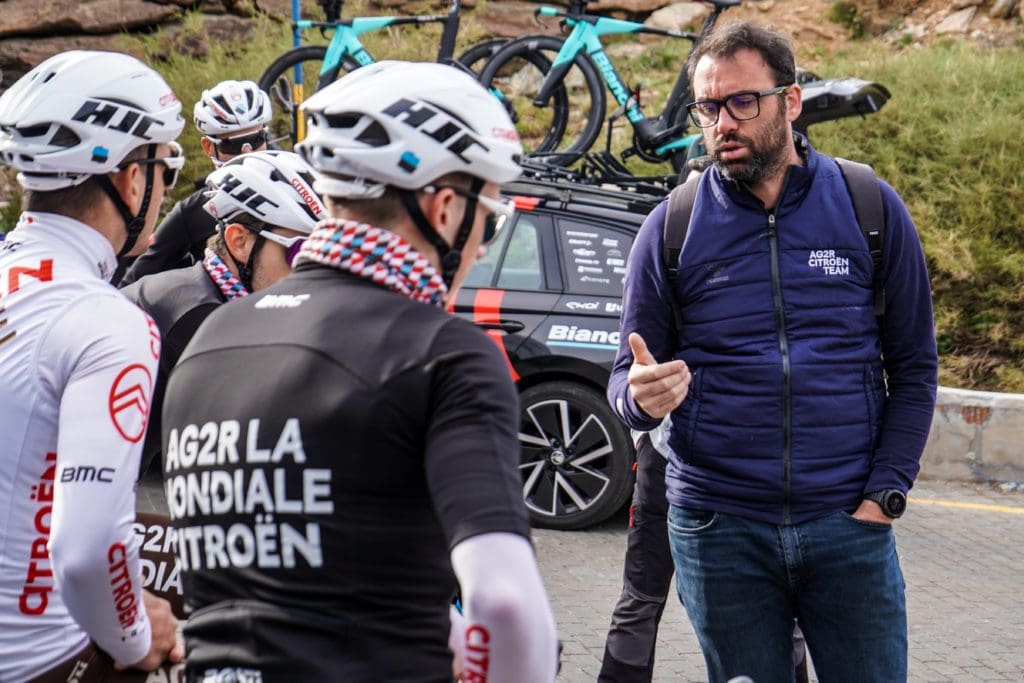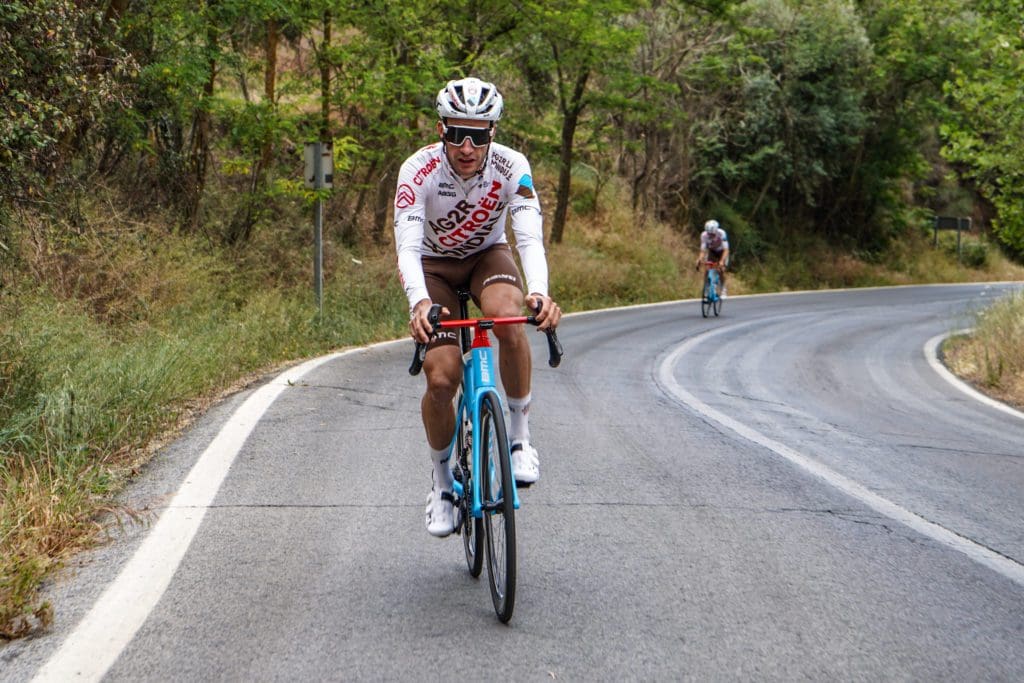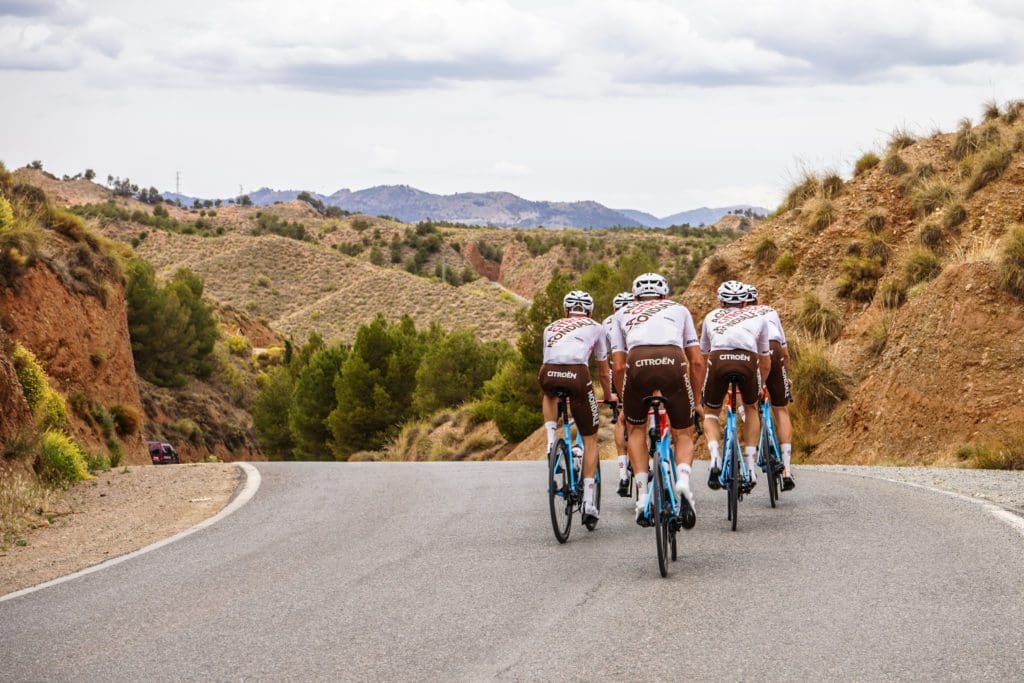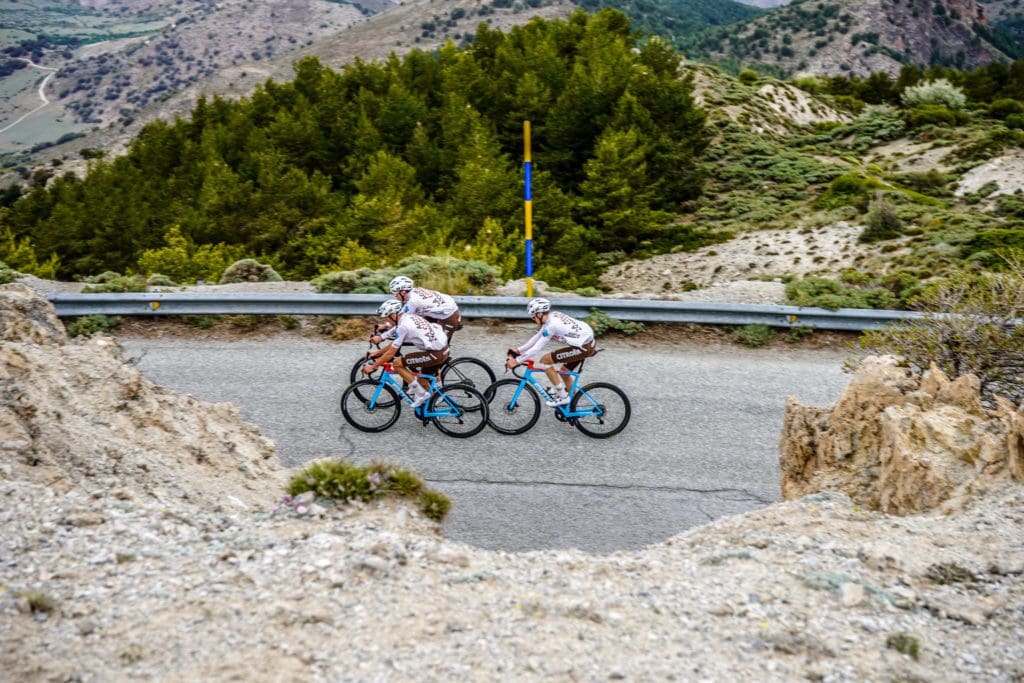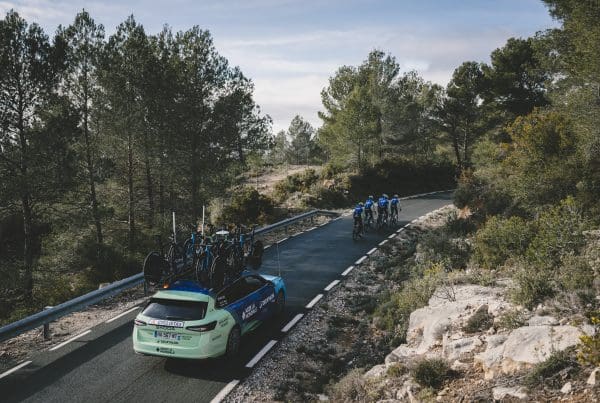
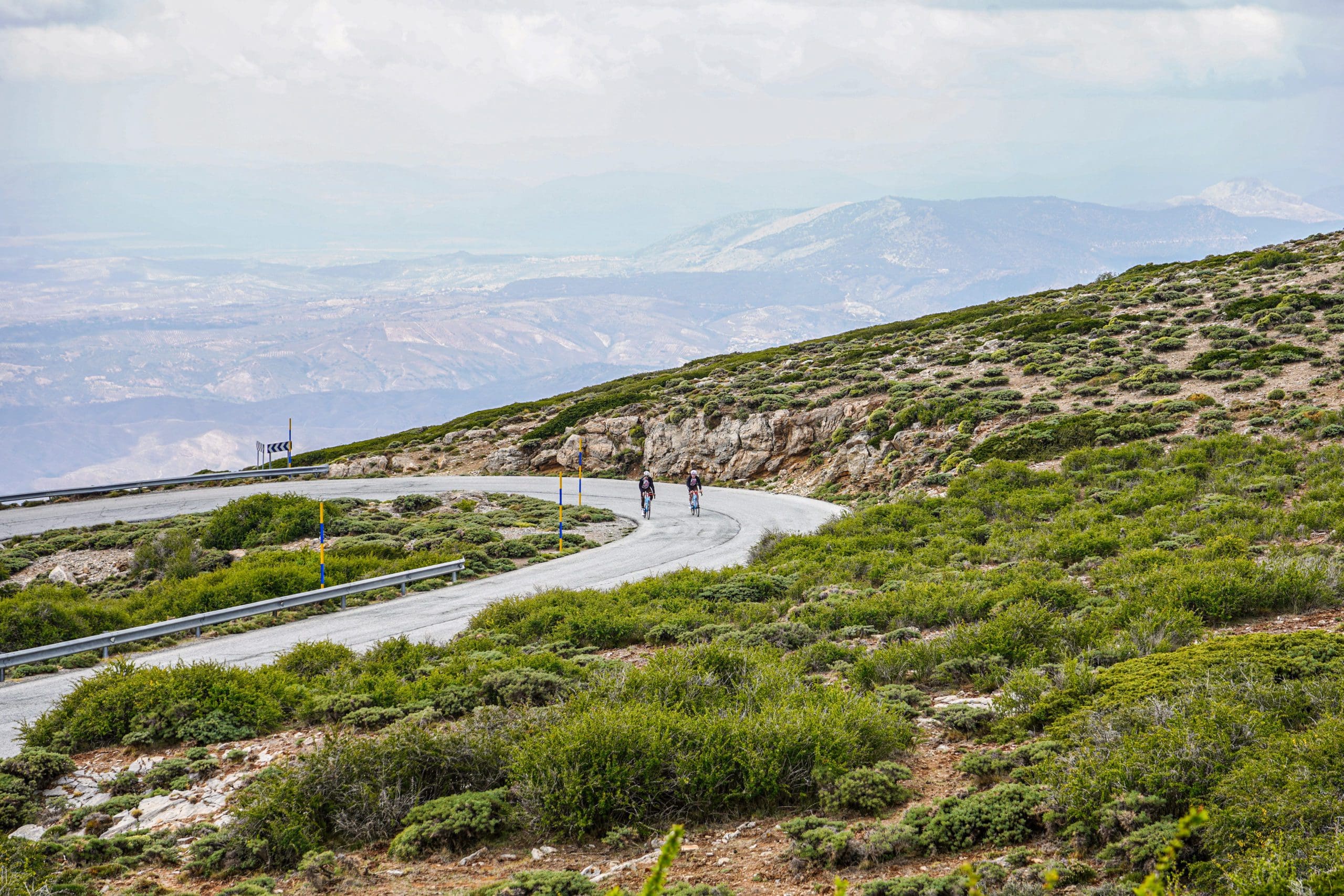

As the main goals of the year approach, riders regularly participate in training camps to improve their physical condition for the races. As part of their preparation for the Critérium du Dauphiné and the Tour de France, seven riders from the team gathered in Sierra Nevada (Spain) at the CAR (Centro de Alto Rendimiento) high-performance centre, located at an altitude of over 2,300 metres, to train in the best conditions for three weeks. Here's what such a training camp involves.
There are many objectives for a high-altitude training camp, and its organisation is meticulously prepared by the team's coaches. Jean-Baptiste Quiclet, our performance director, describes what we are looking for here in southern Spain during the month of May: «At high altitudes, barometric pressure is lower, which means that the body has to work harder to capture oxygen and transport it to the muscles and organs. This creates stress, which leads to additional physiological developments to resolve this problem.»
Adapting to such conditions does not happen overnight, and runners must spend at least two weeks at altitude to see the positive effects of this training camp. «There are two phases: an acute acclimatisation phase, followed by a chronic acclimatisation phase.», explains Jean-Baptiste. «The lasting effects only appear after chronic acclimatisation, which is why we must stay long enough.»
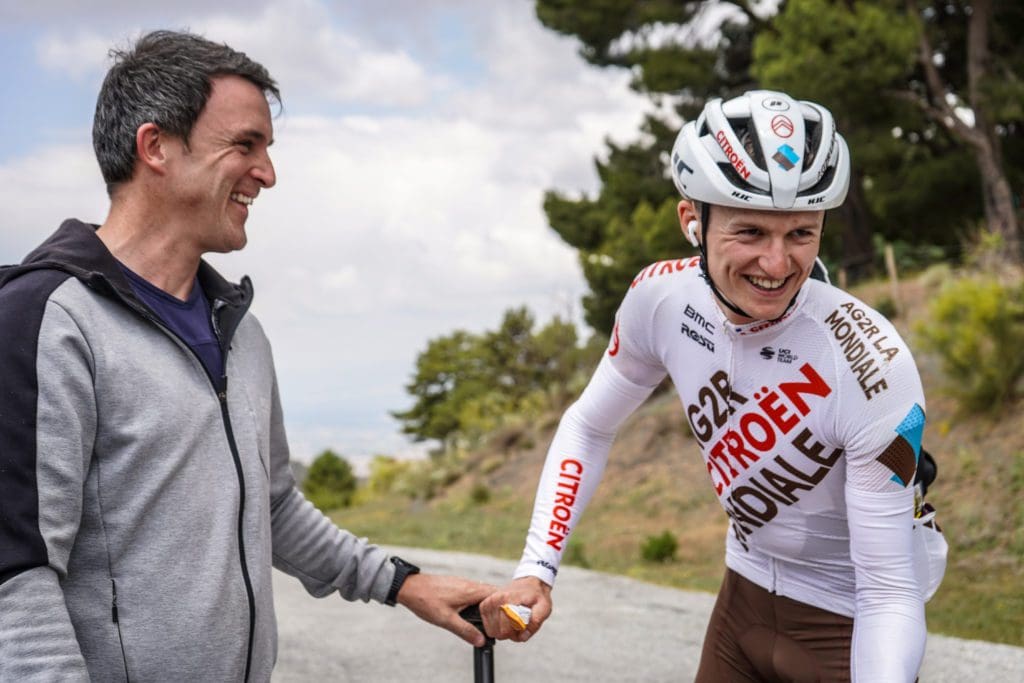
Team cohesion is also very important when preparing for a three-week race like the Tour de France. The riders spend 24 hours a day together, which allows them to get to know each other and communicate. «without even needing to speak», as Felix Gall points out.

Why the Sierra Nevada?
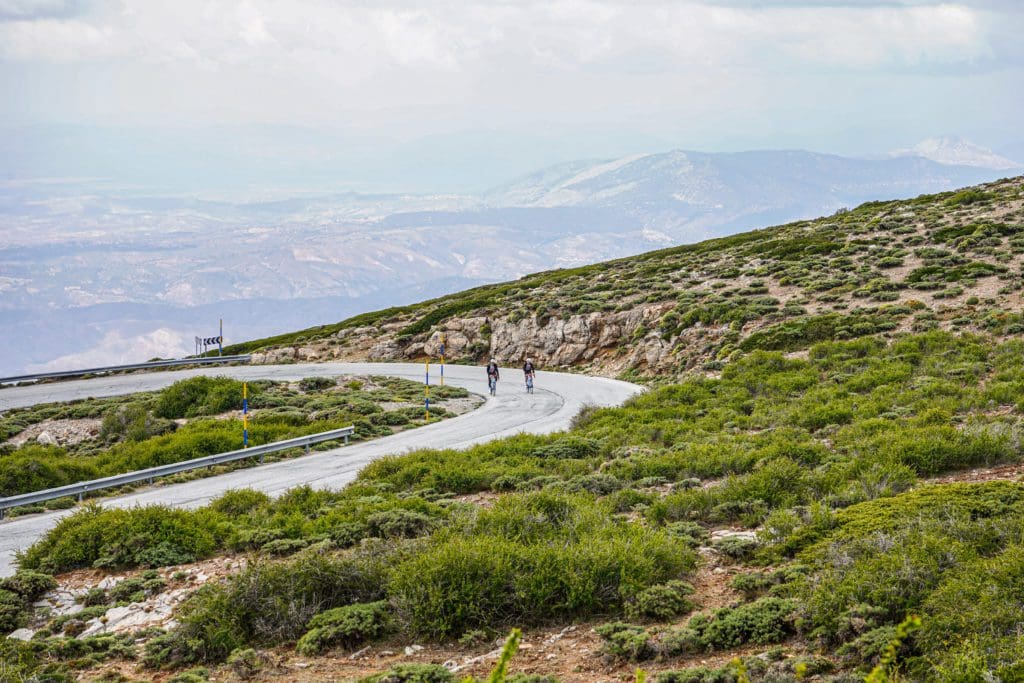
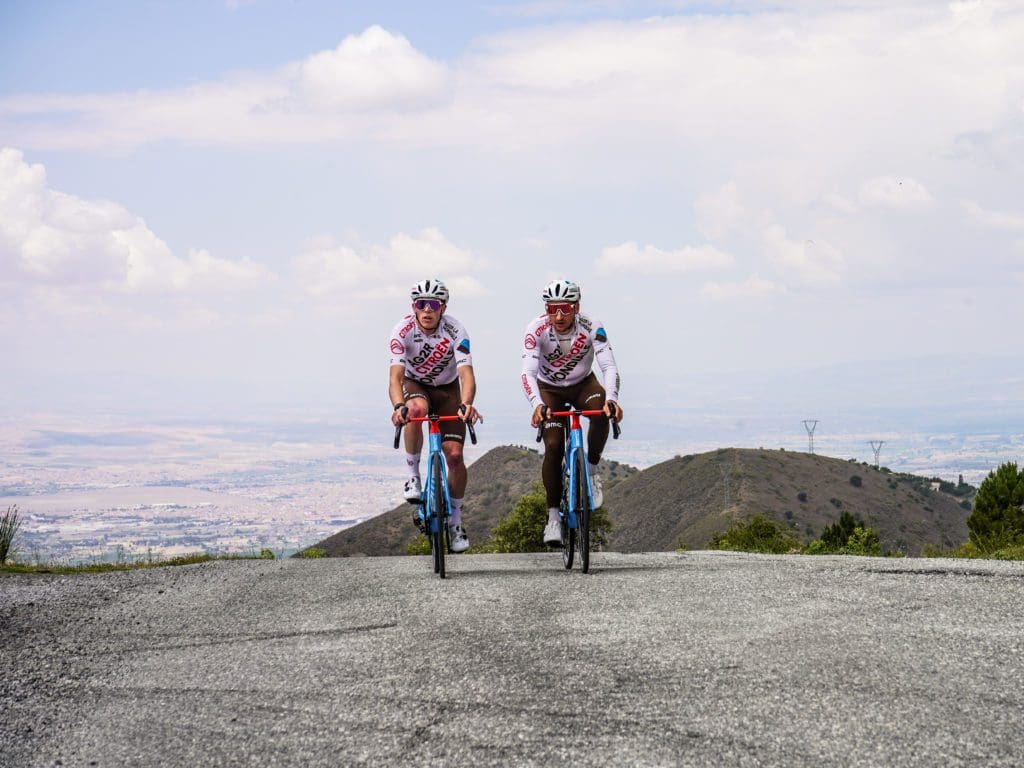
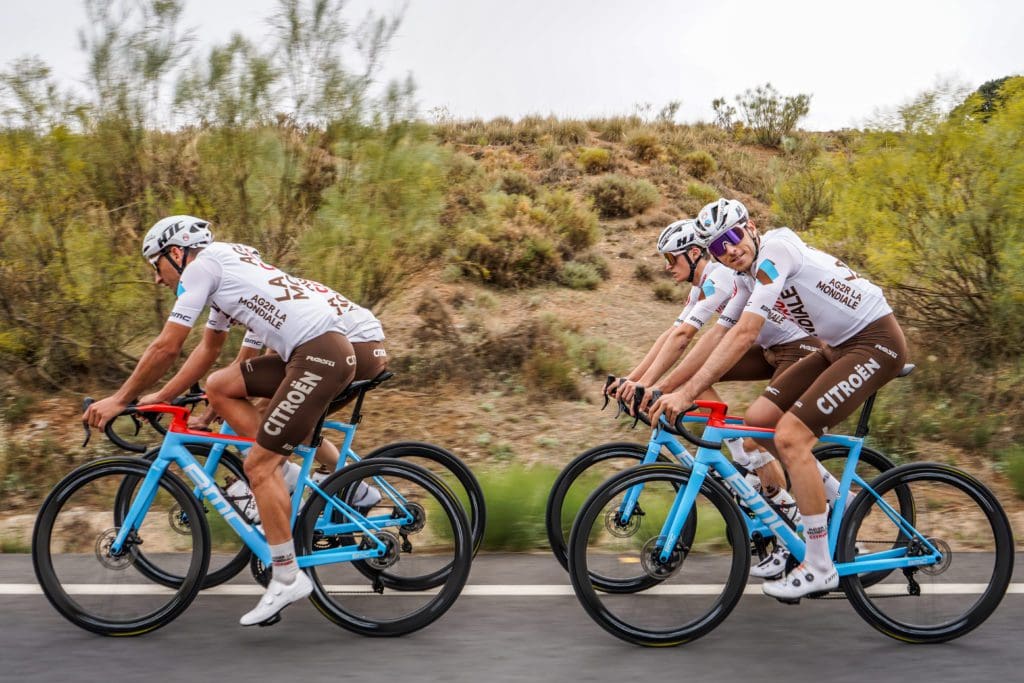
Until May, most of the riders who will participate in the Tour de France have not had the opportunity to climb long, high-altitude mountain passes, which is why the Sierra Nevada is an ideal location. Each day, the rides include mountain passes lasting between 1 hour 10 minutes and 1 hour 30 minutes to prepare for the difficulty of the Tour de France route.
There is also the weather factor, which is essential for ensuring that the course takes place in the best possible conditions. Few places in Europe offer all of these elements. «There are three known sites in Western Europe, which is why all athletes end up in roughly the same place. The physiological effects of altitude exposure begin at 2,000 metres, so when we look at a map of Europe and identify places above 2,000 metres, there are very few: Sierra Nevada, Teide in the Canary Islands and Etna in Sicily.»
The date chosen for this training camp is crucial in order to maintain the benefits until the Tour de France. As with most teams, it takes place in May. Jean-Baptiste Quiclet explains why: «For the Tour de France, we are somewhat constrained because we have to do altitude training before the Dauphiné, as there isn't enough time for prolonged exposure afterwards. That's why, like 99% of athletes, we usually go to altitude in May after the first part of the season, which ends with Liège-Bastogne-Liège or the Tour de Romandie.»
The difficulties of altitude
Upon arriving in Sierra Nevada, the riders prepare themselves for three very demanding weeks, with many hours of training in an environment where the body recovers less easily. It is ideal to arrive in top form and well rested in order to get the most out of this training camp. Dorian Godon was only able to complete a few rides before falling ill and having to return home, unable to continue the training camp under these conditions. «If you're already feeling a bit ill or tired and you go up to high altitude, I don't think you'll recover.», says Felix Gall. «The big difference is that recovery is more difficult, especially in the first few days. At first, you have trouble sleeping, you may have headaches and wake up frequently.»
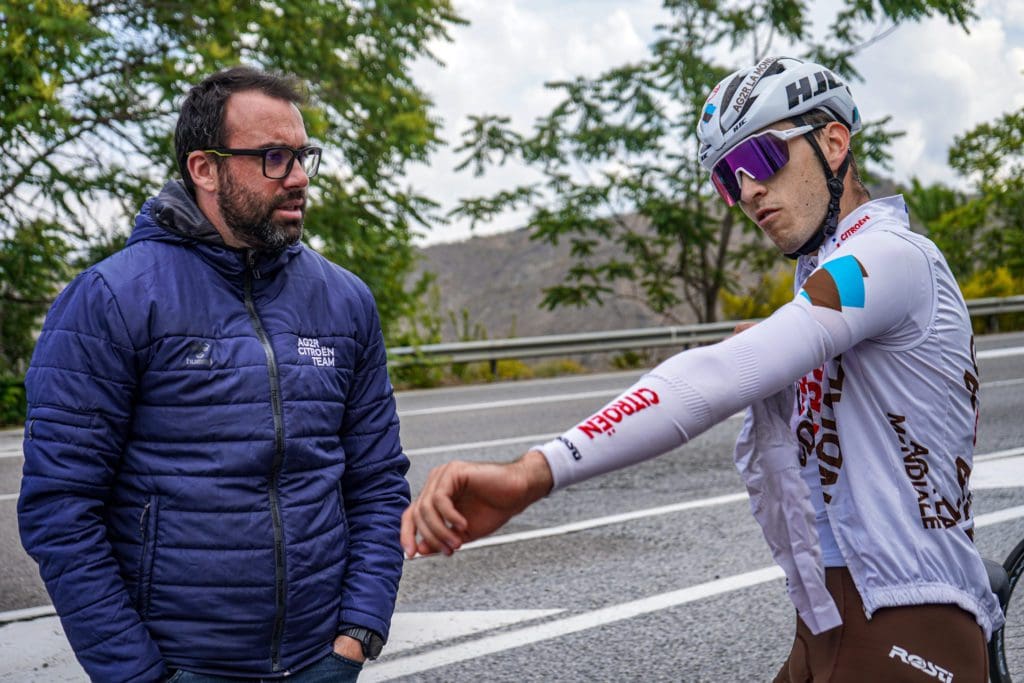
It is therefore important to closely monitor the runners to ensure that they are assimilating the training and the conditions in which they are evolving during the month of May. «We carry out physiological monitoring every morning by measuring hydration, oxygen saturation, heart rate variability analysis and weight, as you can quickly become dehydrated at such high altitudes.», explains Jean-Baptiste. «We all work together, including the sports directors, coaches, nutritionists and the entire team, to plan training sessions and daily schedules based on how the riders are adapting to the altitude.»
The role of Julien Louis, the team's nutritionist, is therefore essential. Every day, he draws up a personalised nutrition plan for each rider, based on the training session they have to complete. If they manage to follow these recommendations to the letter, the riders should have no shortage of energy!

A typical day
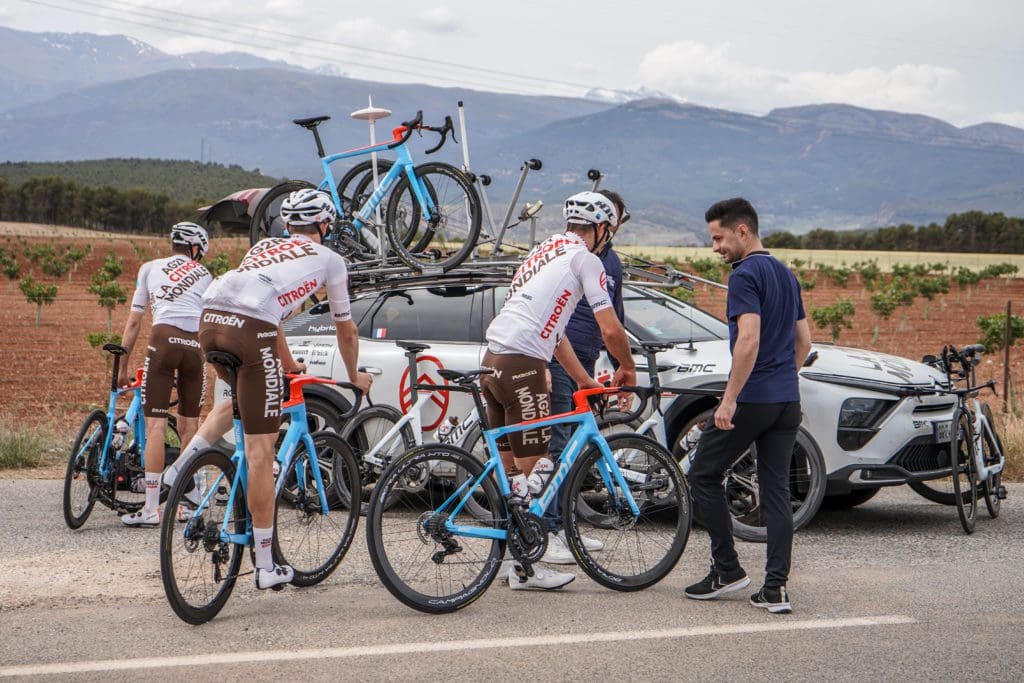
Everything is in place to ensure that the runners have the ideal conditions for training, starting in the morning with a breakfast prepared according to the instructions of nutritionist Julien. Felix Gall describes his day: «After breakfast, we get ready to go training at around 10am. Most of our sessions last between four and six hours, with the longest one lasting seven hours. Then we come back in the early afternoon, have lunch and enjoy a massage. We spend the rest of the evening relaxing and even play a bit of table tennis!»
Massages are also a good time to discuss minor adjustments that need to be made or treatments that need to be put in place. Gregory Mallevre, one of the team's physiotherapists, explains: «After they finish, in addition to massaging the runners, we also take the opportunity to perform mobilisation and stretching exercises, paying a little more attention to any minor discomfort or pain they may have. It's interesting work because we can follow their progress over several days or even weeks. Communication with the runners is also much easier because they are not under the pressure of the race and are more relaxed.»
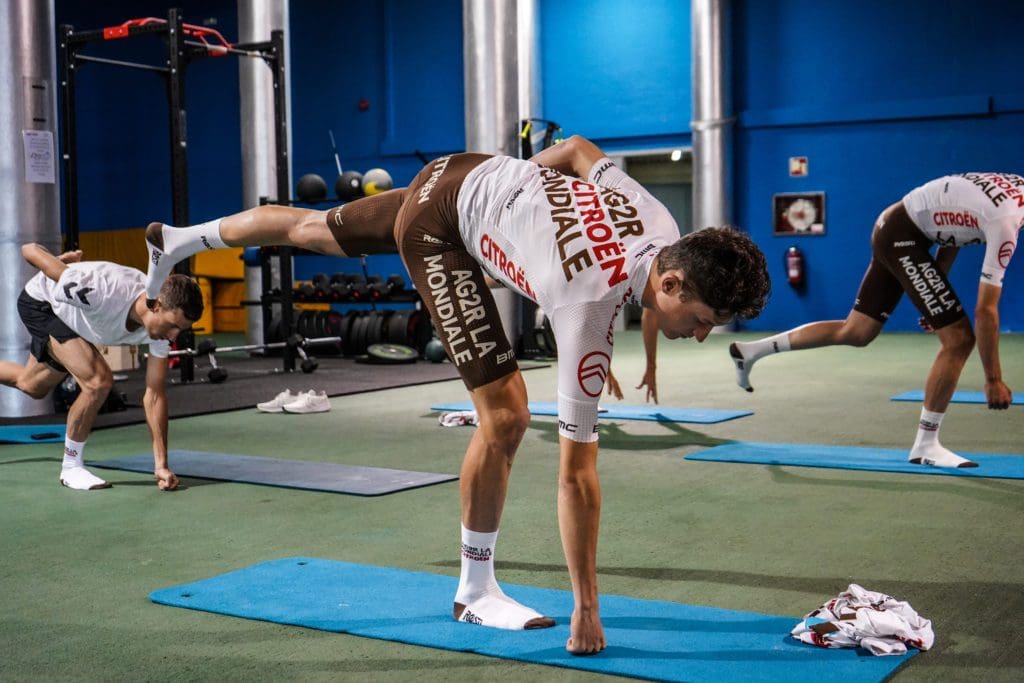
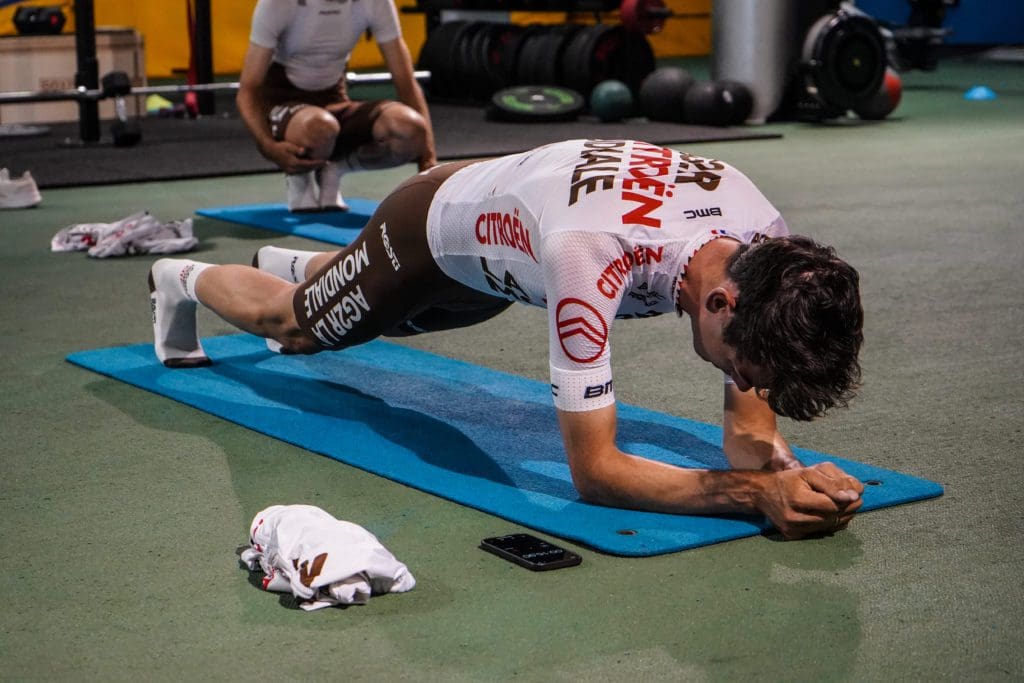
It is also an opportunity to do some mobility exercises with the runners and check their routine. «This morning, we organised a warm-up session to get everyone ready for the race, and for some runners, these very simple exercises allowed us to identify a few areas that could be improved. Nothing major, but these are details that could help them perform a little better.»

Heat management
Usually, the Sierra Nevada experiences very warm weather from May onwards, with temperatures around 20°C at the ski resort where the riders are staying, and reaching 35°C in the valley. However, winter decided to make one last appearance this season, and snow fell on the slopes of the Sierra Nevada for much of the training camp. As heat is a key factor in summer races, particularly the Tour de France, prior acclimatisation is essential.
Although it is impossible to replicate the natural warmth of southern Spain, one tool is used to reproduce this type of climate after training sessions: the sauna. Jean-Baptiste Quiclet explains how it is used: «Just like with altitude, athletes need to acclimatise to the heat before they can exert themselves intensely. It is extremely difficult for runners to adapt to the heat overnight. If, unfortunately, it is very hot during the Dauphiné, it will be very difficult without acclimatisation. We are therefore implementing a sauna protocol immediately after training sessions. These techniques have been validated, especially in preparation for the Olympic Games in Rio and Tokyo.»
The last small percentage
«This training camp is a little extra for the big races, allowing us to gain those last few percentage points of fitness. We're here for three weeks with nothing else to do but think about performance and training. The team takes care of everything else. I can't wait for July, the pressure is mounting.» says Felix Gall. And so do we!
Some photos from the course