
With a new season approaching, the team is preparing to write a new chapter. of its history. Meet Thomas Damuseau, Director of Operations, and Jean-Baptiste Quiclet, Director of Performance, for a behind-the-scenes look at how a season is built, from the initial ideas to the first pedal strokes.s.
1 - When preparation rhymes with precision
The seasons come and go, but no two are alike: technical developments, changes in partners, equipment suppliers, riders and even staff members... Like a balancing act, a cycling team must rest on solid foundations. That is why each new season is prepared with meticulous precision, in order to build a stable base capable of supporting the ambitions for the year ahead. This preparation is based on several criteria that raise many questions.

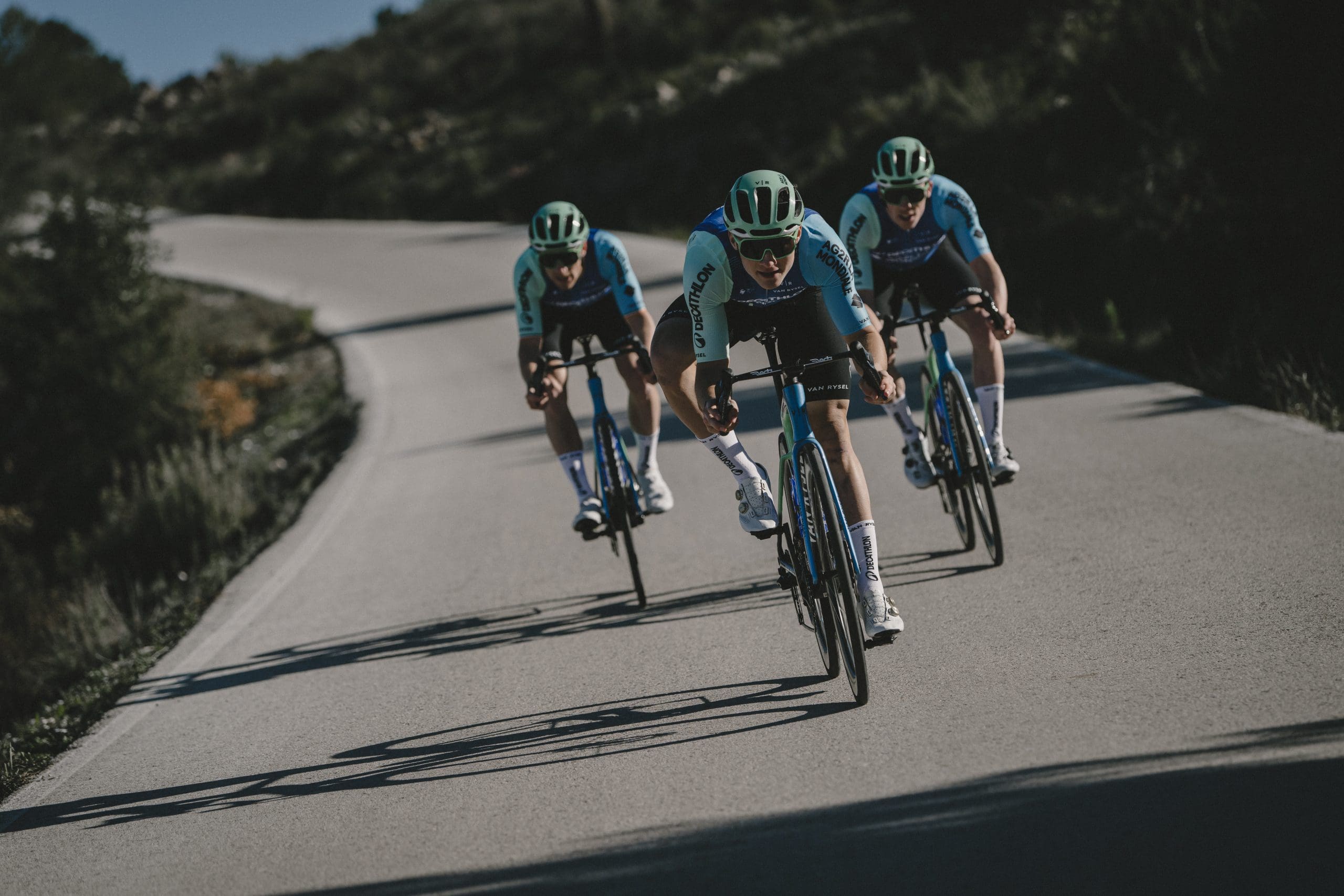
Issues that must be addressed one by one in order to anticipate, every year, needs that may differ depending on partners, riders or objectives. For example, in 2026, the stability of the contract with Van Rysel allows us to be confident, to place orders in advance and to know the equipment: “we are not starting from scratch”, adds Thomas. However, the situation can sometimes be reversed when there is a change of equipment manufacturer. It is therefore advisable to train mechanics specifically for new equipment, in addition to the annual programme. Another example, on the recruitment side: “With the arrival of Olav Kooij and the sprinters' train, more Aerodynamic frames, reinforced pedals and specific gear shifters have been ordered. As soon as we have information about the riders confirmed for 2026, we will update the orders.”, says Thomas.
All these decisions must be made with performance in mind, which remains the priority. The division is highly agile in adapting to different suppliers and the timing of workforce validation. “We have a base order of 70%, and we have 30% of margin depending on recruitment.”, Thomas explains. Before preparing for the season, it is therefore essential to take a comprehensive inventory of these various elements. But when is the right time to address all these issues?
2 - Behind every decision lies a specific timeframe
While the off-season may seem like a quiet period for riders, this is not the case for the staff. “We work out of sync with the cycling season. October, November and December are indeed a busy period: we have three months to prepare the bicycles, vehicles and textiles.” explains Thomas Damuseau. Three months to get everything that had been thought out and planned well in advance up and running. Around fifteen people, including mechanics and logisticians, are working hard to ensure that everything is ready.
The strategic part actually begins much earlier, in the middle of the current season, between six months and a year in advance. “We are obliged to anticipate equipment requirements, based on advice from the innovation division in conjunction with Swiss Side.”, explains Thomas. The idea is that orders arrive during the summer so that mechanics then have time to prepare the bikes: “It must be mechanically assembled, but it must also be given a passport, i.e. it must be put into stock and entered into the computer system.” adds Thomas.
During the first team-building training camp in October, bike fitting is carried out for all riders so that everyone can return home with their 2026 training bike. The time trial bike equipment is pre-assembled. Tests are carried out on the track in November and final adjustments are made during the December training camp, in order to make any last-minute adjustments that may be necessary: “It's during the initial efforts that you get the best feel for your position on the time trial bike, so we prioritise adjustments during training camps.”, Thomas points out.
The 2025 season ended in mid-October, and the riders already have their 2026 bikes at home by the end of the month. This is a true testament to the agility of the team, which knows how to make time an ally of performance.
3 - Preparing for a season from a sporting perspective
In terms of sport, the idea is also to plan ahead as much as possible so that the performance centre be operational very quickly. Five Coaches work with all the team's runners on a daily basis, supported by the head coach and performance director.
From initial discussions in October
Even before the first pedal strokess, you have to learn how to build relationships and establish a working method with each runner. “The coach-trainee relationship is very valuable and must be nurtured on a daily basis.” says Jean-Baptiste. Phone calls, emails, training plans... everyone has their own method, as long as it is effective and suits both parties.
To ensure that the relationship runs smoothly from the very first races, it must be well prepared. “In October, we were fortunate to have all the 2026 runners together at the performance centre, which gave us an opportunity to talk to them for the first time.”, explains Jean-Baptiste. This is an opportunity to talk to each of the trained riders individually, to find out about their lifestyles, any constraints they may have, their aspirations for 2026, and to establish a working method. To help them, coaches have access to data on new riders from previous seasons so that they can quickly establish an effective working method.

Before setting the objectives and timetable in November
Once the training method has been agreed with the riders, usually in October, a meeting with all the sports directors is held in November to set the objectives for the season: the idea is clear, to arrive at the races with the best possible team. “At this meeting, we select the most important races on the calendar for the team and assign riders to them. That's how we build the backbone of the calendar.”, says Jean-Baptiste. The entire 2026 calendar is reviewed to assign staff to each race. “We analyse the race routes, particularly that of the Tour de France: depending on whether there is a team time trial, as there is this year, we will not field exactly the same riders or plan our preparation without taking this into account.”, explains Jean-Baptiste. All the races on the calendar are detailed, with the associated desires and needs for each one. This means that in December, every rider will have a preliminary calendar for their 2026 season, regardless of their role. This programme is, of course, provisional and will be adjusted throughout the season.
Organise resources in December
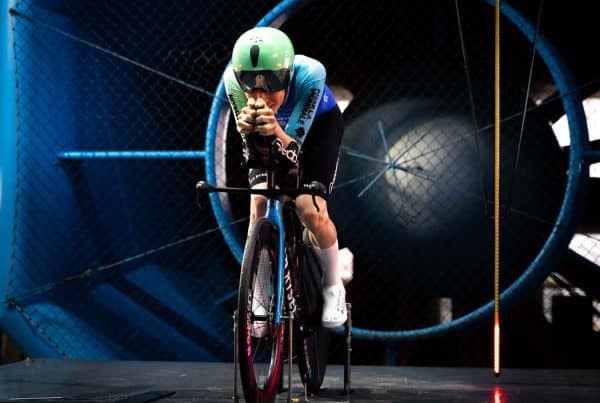
Once the objectives have been set and the riders assigned, the next step is to discuss the methods to be used: individual training camps? Group training camps? Wind tunnel tests? Team time trial training? All of this will be determined based on the objectives of the team, each rider and each race, and prepared with meticulous precision. “Another example is the 2026 Tour de France: it will start with a team time trial. We will therefore focus particularly on this exercise in preparation for the Grande Boucle, and adapt the training schedule accordingly.” Jean-Baptiste emphasises. Then, with regard to other training courses and methods, it will depend on each runner's objectives. “Preparation races no longer exist. We line up for races to perform and to win. To train, we will do several training camps with different training groups.”, adds Jean-Baptiste. Find out more at video the secrets of the team's preparation.
Each season therefore has its share of uncertainties and predictable elements, and the 2026 season is no exception. As we have seen, it promises to be exciting and has already been well underway for many months. With the arrival of CMA CGM as title partner, Adecco as official partner, and new riders, a promising season is on the horizon... So stay tuned to find out what's next!